Calving Season from Zanzibar: Mikumi or the Serengeti in January and February?
You cannot see the wildebeest calving on a day trip from Zanzibar. Where the calving happens, why the flights rule out a same-day return, what Mikumi shows you instead, and what a three-day Ndutu trip costs.
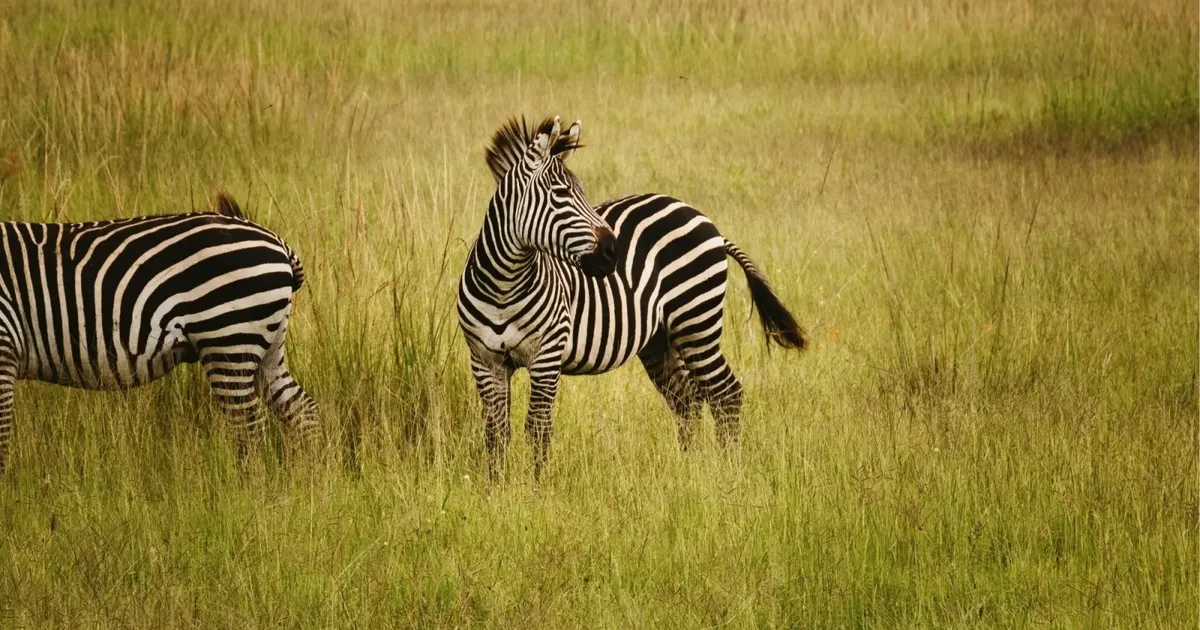
You cannot see the wildebeest calving on a day trip from Zanzibar. The calving happens around Ndutu, on the border of the Serengeti and the Ngorongoro Conservation Area, and the scheduled flights from the island do not allow a same-day return. Mikumi is a different park with no mass calving, but it is a reliable one-day safari with young animals in the herds from November to April. So you have two clear choices: a Mikumi day trip if the safari is one day of a beach holiday, and a three- or four-day Ndutu fly-in if the calving is the reason you came.
Check Availability
If one day is all you have, the shared fly-in day trip to Mikumi is the one most travellers book. Check your date in the booking box below; January and February seats go first around the school holidays.
Quick answer
| Question | Answer |
|---|---|
| Where is the calving? | On the short-grass plains of the southern Serengeti ecosystem, centred on Ndutu (mostly inside the Ngorongoro Conservation Area), from late January into March, peaking in February |
| Can I see it on a day trip from Zanzibar? | No. Coastal Aviation’s daily Zanzibar to Ndutu flight lands at 11:45, and the daily Ndutu to Zanzibar flight leaves at 10:55. A same-day return needs a private charter |
| Does Mikumi have a calving? | Not a migration calving. Mikumi’s resident wildebeest, zebra, impala and warthog have young in the rainy months, so you see young animals but no mass births |
| Mikumi day trip from Zanzibar | From $430 per person shared, flights, park fees and lunch included |
| Ndutu fly-in from Zanzibar | Three days at least; packages we sampled run from about $1,600 to $2,650 per person |
| Our pick | One spare day: the Mikumi day trip. The calving is the point of the trip: a three- or four-day Ndutu fly-in. Ten days or more on the island: do both |
What is the wildebeest calving season, and where does it actually happen?
The calving season is the few weeks each year when the Serengeti’s migratory wildebeest give birth, almost all at once, on the southern short-grass plains around Lake Ndutu and Lake Masek. It is the start of the Great Migration year. It is not a river crossing, and it does not happen anywhere near Zanzibar or Mikumi.
Picture a lawn that runs to the horizon, green after the short rains, broken only by granite kopjes and the flat silver of soda lakes. Out on it are hundreds of thousands of wildebeest, zebra in the gaps, and the odd heavily pregnant cow lying down in the middle of the herd. Births usually happen in the morning. A calf can stand within minutes, and somewhere nearby a hyena is already watching.
How many calves are born, and how fast?
- About 500,000 calves in roughly three weeks. Clay, Calabrese, Estes and colleagues give this figure in “Male rutting calls synchronize reproduction in Serengeti wildebeest” (Scientific Reports 8:10202, 2018), describing “the birth of nearly 500,000 calves within a roughly three week period.”
- More than 80% of calves are born in a peak of two to three weeks. That comes from Richard Estes’s 1976 study in the East African Wildlife Journal. A re-analysis of his data puts the window in which 80% of calves were born at about 19.6 days in 1973 and 29 days in 1965, so the peak is tight but can shift by more than a week from one year to the next.
- “8,000 calves a day” is the number many operators quote. It is roughly what 500,000 births over a couple of months would average, and peak days would be higher. We could not trace it to a peer-reviewed source, so read it as a popular estimate.
- How big is the herd? Estimates vary by survey year and are now contested. TAWIRI’s 2023 wet-season aerial census counted 1,366,109 ± 231,741 wildebeest. A 2025 satellite and AI study in PNAS Nexus counted “fewer than 600,000 individuals”, about half the widely cited 1.3 million.
Why do they calve there?
The southern plains sit on volcanic ash blown west from the Ngorongoro highlands. The short grasses that grow on it after the rains are rich in calcium and phosphorus, which a nursing mother needs for milk and a calf needs for bone. M.G. Murray’s work on wildebeest nutrition (in Serengeti II, 1995) is the standard reference, and the CMS fact sheet on the migration says lactating females “take advantage of the rich but brief grazing conditions on the southern short-grass plains to give birth.” The open, short grass also makes it hard for predators to creep up unseen.
Which predators follow the calves?
- Spotted hyena is the main predator of wildebeest calves (Estes, 1976).
- Cheetah do well on these open plains, and February at Ndutu is one of the best cheetah windows in Africa.
- Lion prides hunt the edges of the plains and the marshes.
- Jackal, serval, caracal and leopard (in the Ndutu woodland) complete the list.
So many calves arrive at once that the predators can eat only a fraction of them. Biologists call this predator swamping.
Is Ndutu in the Serengeti?
Mostly not, on the map. The Ndutu area straddles the boundary. Lake Ndutu, its lodges and much of the calving ground lie in the Ngorongoro Conservation Area, run by the Ngorongoro Conservation Area Authority (NCAA). The plains to the north and west are in Serengeti National Park, run by Tanzania National Parks (TANAPA). The two charge different fees and have different rules, set out below, and on a good day your guide may cross between them.
When exactly is calving season, and how reliable is the timing?
Plan for February, with late January and early March as the shoulders. The rains set the date. Most of the herd is usually on the southern plains from December to March. Births start in January and peak sharply for two to three weeks, most often in February.
Rain is the wild card. The short rains, roughly November and December, green the plains, and a drier spell often follows in January and February. If that dry spell bites hard, the grass fails and the herds move on, even in the middle of calving. In January 2026, guides posting on the TripAdvisor Tanzania forum described Ndutu as “a dust bowl, no rain”, and one reported on 24 January 2026 that “some herds are heading North of Ndutu into the Serengeti park area (Moru region).” For the 2026–27 season, the Tanzania Meteorological Authority’s outlook for the October to December short rains, issued on 18 August 2026 and reported by The Chanzo, forecasts “above-normal to normal” rain for Arusha, Manyara, Mara and Simiyu, with the heaviest rain in November lasting into January 2027. Forecasts can be wrong, so keep your dates flexible if you can.
What this means for your plans:
- Book at least two nights at Ndutu, ideally three. A guide with a good radio network matters more than which camp you pick.
- Mid-February is the safest single target. Late January and early March cost less and have slightly lower odds.
- Choose a camp that can move with the herds, or one close to the plains, so a short shift in the herds does not cost you two hours of driving each way.
| Period | What you are likely to see at Ndutu | Odds of births and kills | Notes |
|---|---|---|---|
| December | Herds arriving, early births | Low to moderate | Green, fewer visitors |
| Late January | Calving building, predators gathering | Good | Our value pick |
| February | Peak births, peak predator action | Best | Busiest; book 6 to 12 months ahead |
| Early March | Late calving, herds start drifting | Good to moderate | Calmer, still excellent for cats |
| April to May | Long rains, herds gone west | Very low | Some camps close |
For January and February weather on Zanzibar and in Mikumi, see our January–February guide. The month-by-month picture for Mikumi is in the best time for a Mikumi safari from Zanzibar.
What does “baby season” mean in Mikumi?
Mikumi has a real baby season, but not a mass calving. Its wildebeest, zebra, impala, buffalo and warthog are resident herds on the Mkata floodplain. They do not migrate, and they do not drop half a million calves on the same lawn. In the rainy months, roughly November to April, you see young among them: wobbly zebra foals, impala lambs in nursery groups, warthog piglets running with their tails up, and the odd small wildebeest calf.
Some operator pages blur this line. A phrase like “calving season begins in Mikumi; newborn wildebeests wobble on toothpick legs” is true in a small, local sense, but it invites you to picture the Serengeti. Mikumi is not the calving site. If a listing implies you will see “the migration” or “the calving” on a Mikumi day trip, it is overselling. Our Mikumi National Park explainer covers what the park does and does not have.
What Mikumi gives you in January and February:
- Open Mkata plains with good visibility and young animals among the herds
- Lions, elephants, giraffe, buffalo and the hippo pool on a typical full day
- Green-season light, migrant birds (see our Mikumi birding guide) and very few vehicles
- One day, door to door, from Zanzibar
| Mikumi “baby season” | Ndutu calving | |
|---|---|---|
| Wildebeest | Resident herds | Migratory Serengeti–Mara herds (about 1.37 million in TAWIRI’s 2023 census; a 2025 study suggests under 600,000) |
| Scale of births | Scattered young among resident herds | About 500,000 calves in about three weeks |
| Predator action | Regular lion sightings; no calving-driven feast | Intense: hyena, cheetah, lion, jackal |
| Day trip from Zanzibar? | Yes (a flight of about 45 minutes to an hour each way) | No (three days is the realistic minimum) |
| Typical cost from Zanzibar | $430 to $550 per person | About $1,600 to $3,500 per person |
Can you see the calving on a day trip from Zanzibar?
No, not on scheduled flights, and we do not recommend chasing a charter version. The flight times rule it out.
The flight maths (Coastal Aviation timetable, valid to 31 May 2027)
| Route | Departs | Arrives | Adult fare | Taxes |
|---|---|---|---|---|
| Zanzibar to Serengeti/Ndutu (daily, via Arusha and Manyara) | 08:40 | 11:45 | $586 | $44 |
| Serengeti/Ndutu to Zanzibar (daily, via Arusha) | 10:55 | 14:20 | $642 | $37 |
| Serengeti/Ndutu to Arusha (daily, afternoon, via Manyara and Kilimanjaro) | 17:05 | 18:20 | $343 | $22 |
By the time you land at Ndutu at 11:45, the only Zanzibar-bound flight left almost an hour earlier. The afternoon departure reaches only Arusha, at 18:20, too late to connect to Zanzibar. The scheduled flights alone come to $1,228 return plus $81 in taxes, before park fees, a guide or a bed. Coastal publishes these fares gross and exclusive of airport tax, and they can change, so check the current timetable when you book. One independent planning guide, GetSafariTours, puts it plainly: “The Serengeti can’t be done in a day on scheduled flights.”
What about those “Serengeti day trip from Zanzibar” listings?
They exist, and the small print matters:
- A TripAdvisor listing advertises a “Full-Day Game Drive in Serengeti National Park from Zanzibar” from $600 per adult, with a 06:00 twin-engine flight of about 1 hour 30 minutes to Seronera and a 17:00 return. That can only work by charter, and $600 is below the scheduled one-way fare. Treat the price as a teaser and get the aircraft, the airstrip and the inclusions in writing.
- Rede Tours quotes a one-day Serengeti fly-in from Zanzibar at $960 per adult on its page, while the page’s own structured data lists $2,500. Two prices on one page are a red flag.
- Tanzanianationalparks.com sells a one-day “flying safari” with a 04:00 hotel pickup to Seronera.
- These all go to Seronera, in the central Serengeti, far from Ndutu. In February the herds are usually a drive of 1.5 to 2 hours or more south of Seronera, so a Seronera day trip in calving season can easily mean lions and scenery but no calving.
Our verdict: a same-day Serengeti trip from Zanzibar costs more than a two- or three-day fly-in once the charter is priced in. It also gives you four to six hours on the ground in the middle of the day, when cats sleep and births are winding down, and with weather and air traffic it leaves no margin. Skip it. Do Mikumi in a day, or give the calving three days.
What are the realistic options from Zanzibar, and what do they cost?
There are four realistic options, from a $430 day trip to a week-long northern safari. Prices were checked in October 2026 and they change often.
Option 1: Mikumi day trip (our pick if you only have one day)
- Shared: From Zanzibar: Mikumi Safari Day Trip with Flights and Lunch costs from $430 per person and is rated 4.7 out of 5 from 3,190 reviews, the most-reviewed Mikumi trip on GetYourGuide. Flights, park fees and lunch are included. Read our breakdown of this trip.
- Small vehicles: the twin-engine day trip costs from $525 and is rated 4.7 out of 5 from 158 reviews. It suits photographers who want fewer people per 4x4.
- Open vehicles: the open 4x4 full-day safari costs from $550 and is rated 4.1 out of 5 from 41 reviews, lower than the two above, so read the recent reviews before you book.
- On Viator: the fly-in day safari on Viator is from $500 and rated 4.95/5 from 417 reviews.
- The day itself: the flight takes about 45 minutes to an hour each way. Pickups run from about 04:30 to 06:00 depending on your hotel, the return flight leaves between about 15:00 and 16:30, and you are back at your hotel in the early evening. See hotel pickup times and the hour-by-hour itinerary, and what a Mikumi day trip costs for the full price breakdown.
Option 2: Nyerere (Selous) day trip
A shorter flight with boat safaris on the Rufiji River. It has no calving either. See Mikumi vs Nyerere (Selous) for how the two compare as day trips.
Option 3: Three- or four-day Ndutu fly-in from Zanzibar (the minimum for calving)
- Three-day Ndutu calving fly-ins: the operator packages we sampled in October 2026 ran from about $1,600 to $2,650 per person sharing, with private trips for two at about $3,500 per person.
- Serengeti fly-ins based at Seronera: check the airstrip. A Seronera trip is not a calving trip unless it explicitly drives south to Ndutu.
- Our pick on Viator: 3 Days Serengeti and Ngorongoro Crater Fly in Safari starts and ends in Zanzibar, includes return flights, park fees, lodges and meals, and is from $2,303 per person, rated 4.98/5 from 41 reviews. The listing does not name the airstrip or Ndutu, so for a January or February date ask the operator in writing to base you on the southern plains.
- Price check: very low “three-day Ndutu from Zanzibar” prices, around $839 to $1,236, often assume a drive from Arusha, budget camping, groups of six, or no flights. The scheduled flights alone cost about $1,300, so ask for a line-by-line list of what is included.
Option 4: A northern safari of four to seven nights (the fullest experience)
Fly from Zanzibar to Ndutu for three nights, then drive via the Ngorongoro Crater and fly out of Manyara or Arusha. GetSafariTours’ indicative pricing is about $2,800 to $2,900 per person for four days and about $3,500 for six days, flying in and driving out.
Time and cost compared
| Option | Days from Zanzibar | Typical price per person | Calving? | Big cats | Crowds (Jan–Feb) | Best for |
|---|---|---|---|---|---|---|
| Mikumi day trip (shared) | 1 | From $430 | No (resident young only) | Lions likely; leopard rare | Very low | Short on time, beach first |
| Mikumi day trip (small or open vehicle) | 1 | $525 to $550 | No | As above | Very low | Families, photographers on a budget |
| Nyerere day trip | 1 | See our comparison | No | Lions, wild dog possible | Low | Boat safari fans |
| Seronera “day trip” (charter) | 1 | $600 to $2,500 (unverified) | Unlikely | Good, but midday heat | Moderate | We do not recommend it |
| Ndutu fly-in | 3 | About $1,600 to $2,650 (up to $3,500 private) | Yes | Excellent, especially cheetah | Moderate to high in February | Migration bucket-listers |
| Northern safari | 4 to 6 | About $2,800 to $3,500 or more | Yes | Excellent, plus the Crater | Moderate to high | A once-in-a-lifetime trip |
Not sure whether one day is enough? Our one day vs two days and private vs shared guides cover the Mikumi side of that choice.
How much are park fees in Mikumi vs Ndutu vs Serengeti?
Ndutu’s daily fee is more than double Mikumi’s, and a night in a lodge or camp adds a concession fee. The figures are non-resident adult rates per person: TANAPA’s posted tariff for Mikumi and the Serengeti, and the NCAA’s tariff page for Ndutu.
| Fee (non-resident adult) | Mikumi NP (TANAPA) | Ndutu / NCA (NCAA) | Serengeti NP (TANAPA) |
|---|---|---|---|
| Conservation or entry fee | $30 per day | $70.80 per 24 hours | $70 per day from 16 May to 14 March; $60 from 15 March to 15 May |
| Child (5 to 15) | $10 | $23.60 | $20 |
| Concession fee, per night in a lodge or camp | $25 | $59 | $60 from 16 May to 14 March; $50 from 15 March to 15 May |
| Other | None on a day trip | Crater service fee $295 per vehicle per descent | Vehicle fees extra |
Key points:
- January and February count as Serengeti peak season. TANAPA’s peak period runs from 16 May to 14 March, so you pay the higher rate if your drives cross into the national park.
- Ndutu is NCA land. Stay at Ndutu and you pay the NCA entry fee for each 24 hours plus the concession fee for each night. Many calving itineraries add Serengeti days and a Crater descent, so check which authority’s fees your package includes.
- VAT. TANAPA’s posted tariff lists its fees without VAT, and many operators quote them with 18% VAT added. The NCAA’s figures already look VAT-inclusive.
- The rumoured 15% rise. Some tour-industry sites have reported a proposed 15% annual rise in TANAPA fees from 2026/27. The tariff on TANAPA’s own website is still the 2023/24 schedule, and we found no official document confirming a rise. In March 2025, TANAPA Assistant Conservation Commissioner Jully Lyimo told The Citizen that rates would stay the same “until March 2026 at the earliest”, with a “minimum 12 months notice period”. Budget at current rates and leave some headroom.
- Concession figures conflict. Some operator sites quote the NCA concession at $71. The NCAA’s own tariff page says $59, and we use the official figure.
- Mikumi fees are included in the day-trip prices above. Confirm “park fees included” on any other listing.
Example: a three-night Ndutu fly-in, fees and flights only, per adult
- Scheduled flights Zanzibar–Ndutu–Zanzibar: $1,228 plus $81 in taxes
- NCA entry, four periods of 24 hours: about $283
- NCA concession, three nights: $177
- Subtotal: about $1,770 before accommodation, guide and vehicle. Packages at about $2,000 to $2,650 are fair value on that basis, and packages well below about $1,600 almost certainly leave something out.
How crowded is Ndutu in February, and can you drive off-road?
Ndutu in February is busy but manageable. It is usually calmer than the Mara River crossings in August, though a popular sighting can still draw a cluster of vehicles. We found no official vehicle count for Ndutu, so anyone quoting precise numbers is guessing. Operators consistently call February the month of highest demand and advise booking 6 to 12 months ahead.
The off-road rules conflict, so here is what we know:
- Serengeti National Park: off-road driving is prohibited. Vehicles stay on the tracks.
- Ndutu (NCA): the NCAA’s visitor guidelines say “off-road driving is not permitted within NCA unless authorized by the Conservation Commissioner of Ngorongoro Conservation Area.” A separate NCAA rules page adds: “No more than 5 vehicles around an animal or kill.” In practice, operators and guides widely report that guided off-road driving is allowed in designated parts of the Ndutu area, which is a big reason photographers love it.
- Our reading: at Ndutu, off-road driving is a privilege your guide controls in designated areas, and the rules can change from season to season. A good guide holds back at a birth or a kill and takes turns at crowded sightings. Tell your operator you want an ethical guide, and do not push for a closer look.
Where to stay at Ndutu
Stay inside the Ndutu area, not near Seronera or in Karatu. Being close to the herds saves hours of driving each day.
- Permanent lodges and tented camps sit around Lake Ndutu and Lake Masek, some with an all-weather airstrip a short drive away.
- Seasonal and mobile camps move with the herds and set up on the southern plains for the calving months. They range from mid-range to luxury, and premium mobile camps can cost $500 to $900 or more per person per night in peak February.
- Ask what the rate includes. Camp rates rarely include the NCA entry and concession fees.
Most travellers book Ndutu as part of a fly-in package, so the operator chooses the camp. Ask how far it is from where the herds are that week.
Who should pick Mikumi, and who should pick Ndutu?
Pick Mikumi if the safari is a highlight of a beach holiday. Pick Ndutu if the calving is the point of the trip.
A Mikumi day trip suits you if:
- You have one free day and a fixed Zanzibar hotel booking
- Your budget is under about $700 per person
- You are travelling with children (see Mikumi with children) or do not want to pack for a night away
- You want a classic first safari, with elephants, giraffe and likely lions, and almost no other vehicles
It will disappoint you if you have your heart set on herds to the horizon; Mikumi does not have them. Our is a Mikumi day safari worth it? guide weighs up the day.
An Ndutu fly-in suits you if:
- The calving or a cheetah hunt is on your bucket list
- You can give up three or more beach days and about $1,800 to $3,500 per person
- You are a photographer who wants predator action on open plains
It is the wrong trip if you hate early starts, small planes or uncertainty. The herds can shift, and nothing is guaranteed.
Can you do both Mikumi and the calving from Zanzibar?
Yes. For a Zanzibar holiday of ten days or more, it is the best way to see both.
Plan A: ten nights, a taste and the spectacle
- Days 1 to 3: beach on Zanzibar, and time to get over jet lag
- Day 4: Mikumi day trip, back by evening
- Days 5 and 6: beach
- Day 7: fly Zanzibar to Ndutu (08:40 to 11:45), afternoon drive
- Days 8 and 9: full days on the calving plains
- Day 10: morning drive, then fly Ndutu to Zanzibar (10:55 to 14:20)
- Day 10 onwards: beach, then fly home, with at least two nights on Zanzibar after any safari before your international flight
Plan B: seven nights, calving first
- Day 1: arrive on Zanzibar
- Days 2 to 5: a three-night Ndutu fly-in
- Days 5 to 7: beach to recover, then fly home. Skip Mikumi, or add the day trip only if you have a spare day.
Plan C: fourteen nights, the full circuit
Zanzibar (three nights), Mikumi day trip, beach (two nights), Ndutu (three nights), Ngorongoro Crater (one night), fly from Manyara or Arusha back to Zanzibar, then beach (three nights or more).
Want a longer trip in the south instead of the north? Mikumi vs Ruaha covers the southern fly-in alternative.
Practical notes
- Mandatory inbound travel insurance. Since 1 October 2026, foreign visitors entering mainland Tanzania must hold the government inbound policy under Government Notice No. 256 of 2026: $44 per adult, valid for up to 92 days. Zanzibar has required its own ZIC policy since 1 October 2024. You buy one policy, for your first port of entry, and your own travel insurance does not replace it. Details: Zanzibar’s mandatory travel insurance.
- Malaria: Mikumi and Ndutu are both malaria areas. See malaria and yellow fever for Zanzibar and the mainland.
- Light aircraft and airstrips: Mikumi day trips land at the Kikoboga airstrip inside the park. Our light-aircraft guide and flying vs driving guide cover what to ask an operator about aircraft and safety.
- Weather cancellations: January and February storms can delay small planes. See free cancellation and weather.
- Ramadan 2027: Ramadan is expected to begin on Monday 8 February 2027, with Eid al-Fitr on 9 or 10 March, subject to the moon sighting. That overlaps peak calving. It barely affects a safari, but on Zanzibar some restaurants close during the day and modest dress matters more. Our January–February guide has the details.
- Luggage: small planes usually allow about 15 kg per person in soft bags. See what to pack for a Mikumi day safari.
FAQ
Can I see the Great Migration on a day trip from Zanzibar? No. The calving happens at Ndutu in the southern Serengeti ecosystem. The scheduled flight from Zanzibar lands at 11:45, after the only same-day flight back has left, so you need at least three days.
Is there wildebeest calving in Mikumi? Not a mass calving. Mikumi’s resident wildebeest, zebra and impala have young in the rainy months, but the event of about 500,000 calves happens only on the Serengeti’s southern plains.
When is calving season in 2027? Expect late January to early March 2027, peaking in February. The exact timing depends on the rain.
How many wildebeest calves are born? Scientists estimate nearly 500,000 calves in about three weeks. The popular “8,000 a day” is an operator estimate, not a measured figure.
How long is the flight from Zanzibar to Ndutu? On Coastal Aviation’s timetable it takes about three hours with stops, from 08:40 to 11:45. The return runs from 10:55 to 14:20 via Arusha.
How much does a Ndutu calving safari from Zanzibar cost? Three-day fly-ins run about $1,600 to $2,650 per person, and up to $3,500 private. The scheduled flights alone cost about $1,300 return.
How much does a Mikumi day trip from Zanzibar cost? Shared fly-in trips start at $430 per person, with flights, park fees and lunch included. Trips with smaller or open vehicles cost $525 to $550.
What are the park fees at Ndutu? Ndutu is in the Ngorongoro Conservation Area: $70.80 per adult per 24 hours, plus $59 per night concession if you stay in a lodge or camp. Serengeti National Park charges $70 per adult per day in January and February on TANAPA’s posted tariff.
Is off-road driving allowed at Ndutu? Guided off-road driving is widely reported in designated parts of Ndutu, though the NCAA’s guidelines say it needs authorisation. It is prohibited in Serengeti National Park.
Do I need the new Tanzania travel insurance for a safari? Yes. Since 1 October 2026, foreign visitors entering mainland Tanzania need the $44 government inbound policy, valid for 92 days. Zanzibar’s ZIC policy covers you if you enter there first.
How we checked this guide
Flight times and fares come from Coastal Aviation’s published timetable (valid 1 June 2023 to 31 May 2027, updated December 2025), checked on 28 October 2026. Park fees come from the NCAA’s tariff page and TANAPA’s 2023/24 tariff schedule, both checked on 28 October 2026, with The Citizen’s 2025 reporting on the fee freeze. Calving figures come from peer-reviewed sources: Estes (1976, East African Wildlife Journal) and Clay et al. (2018, Scientific Reports). The nutrition explanation follows Murray (1995) and the UN CMS wildebeest fact sheet. Tour prices are the listing prices on GetYourGuide and Viator, and package prices are operator and SafariBookings listings sampled in October 2026. They change often, so confirm the final price and inclusions at checkout. Where sources conflicted (concession fees, off-road rules, “8,000 a day”, the rumoured fee rise) we have said so.
Decided on Mikumi? Every safari we list books with free cancellation up to 24 hours before departure — compare them all.
See Tanzania's Big Game — and Sleep on Zanzibar Tonight
Join 3,000+ travellers who have flown Zanzibar–Mikumi and back in a day. Return flights, park entry and landing fees, a shared 4x4 game drive and a bush lunch are all included. Free cancellation up to 24 hours before.
Check Availability & Book