Green-Season Photography on a Mikumi Day Safari: Light, Rain and Lenses
Which lens to bring on a Mikumi day safari, camera settings for storm light and midday sun, phone tips, rain covers and the 15 kg light-aircraft limit, for November to February.
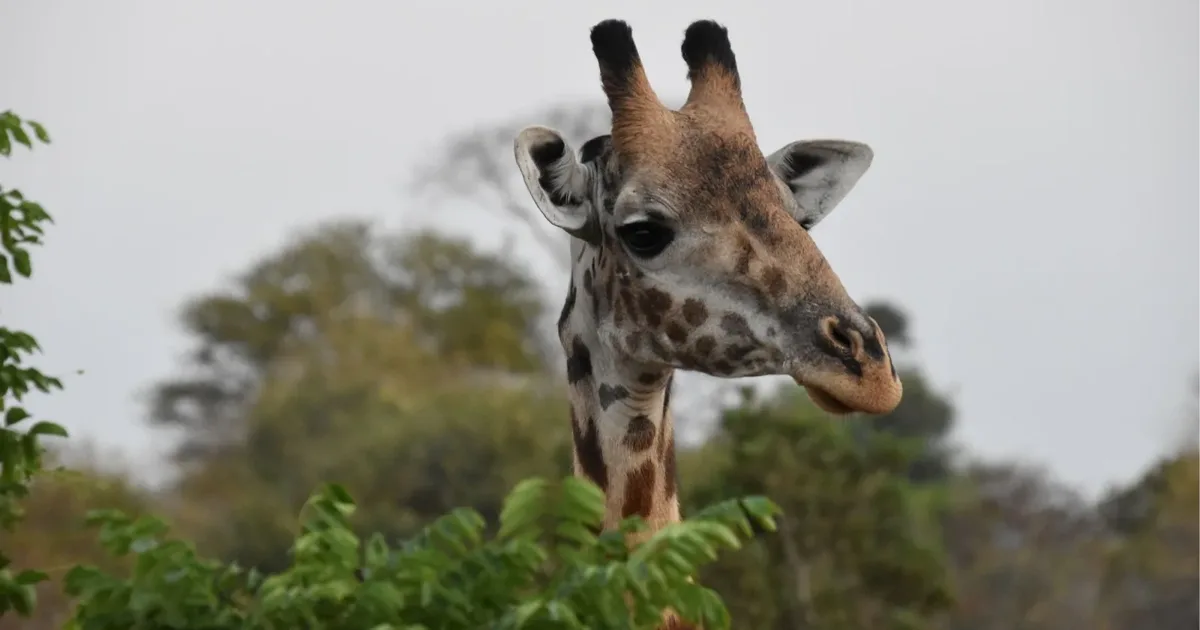
From November to February you can photograph Mikumi well on a day trip from Zanzibar if you bring enough reach and a rain cover. Pack a 100–400 mm zoom (or a bridge camera that reaches 600 mm, or a phone with a 5x telephoto), plan to shoot from about 08:00 to 14:30 in soft overcast and storm light, and forget golden hour: a day trip lands after it and leaves before it.
Check Availability
What this guide covers, in the order you will need it:
- Light: you land around 08:00 and fly out around 15:00, so you get the tail of the soft morning light and none of the evening. Stay a night if golden hour matters to you.
- Lens: a 100–400 mm or 150–600 mm zoom on a mirrorless body; a 70–300 mm is the budget minimum.
- No interchangeable lenses? The Sony RX10 V (24–600 mm, $2,299.99) or the Nikon P1100 (24–3000 mm, about $1,147).
- Phone: use the optical telephoto (5x on the Galaxy S26 Ultra and Pixel 10 and 11 Pro; 4x and 8x on the iPhone 17 and 18 Pro) and skip AI super-zoom for wildlife.
- Settings: shutter priority or manual with Auto ISO, 1/1000 s for animals, 1/2500 s or faster for birds in flight, RAW, animal-eye autofocus, and −0.3 to −1 EV against bright skies or white birds.
- Rain: a rain sleeve (from $9.49), a dry bag and silica gel.
- Weight: Coastal Aviation allows 15 kg per person in total and Auric Air 20 kg, cameras included.
- Rules: no drones without a TANAPA permit chain, no off-road driving, no baiting.
Why is green season (November to February) good for photography in Mikumi?
It gives you the best backgrounds and skies of the year, while the animals are harder to find and the light is harder to manage. After the short rains start, the Mkata floodplain turns vivid green, the dry-season dust goes, and tall cumulus builds through the day. Those clouds make dark, moody backdrops behind pale subjects such as giraffe, eland and elephants dusted in red earth.
What you gain
- Green, uncluttered backgrounds. Fresh grass hides the brown, broken-stick look of the late dry season.
- Storm skies. Slate-grey cloud banks behind sunlit animals are the classic green-season shot.
- Clean, clear air. Rain knocks down dust and haze, so distant subjects stay sharper than in September.
- Young animals. Zebra foals, young impala and wildebeest calves; our page on calving season, Mikumi vs Serengeti sets out what Mikumi does and does not offer.
- Migrant birds. European rollers, bee-eaters and waders join the residents; the Mikumi birding guide has the detail.
- A free softbox. High overcast smooths contrast, so you can shoot portraits at 11:00 that clear sun would spoil.
What you give up
- Taller grass. Lions and smaller antelope can disappear into it by late January and February.
- Scattered wildlife. With water everywhere, animals have little reason to come to the Hippo Pool area or the last waterholes.
- Harsh midday light. At Mikumi’s latitude (about 7.4°S) the midday sun stands about 74–85° high from November to February: short shadows, dark eye sockets and glare.
- Humidity and storms. Afternoon downpours are typical, and lenses fog after air-conditioned cars or aircraft.
- Mud and closures. Some loops can be impassable after heavy rain, and your guide will reroute.
Who it suits: people who like moody landscapes, environmental portraits, birds and frames that show an animal in its surroundings. Who it doesn’t suit: anyone whose only goal is tight, warm, golden-hour lion portraits. Book an overnight in the dry season instead.
Month by month: November and early December usually mix sun with building cloud, the best balance of green and visibility. Late December to February is greener, with taller grass and more frequent storms. Our month-by-month timing guide and the pages on Mikumi in November, Christmas and New Year and January and February describe each month on the ground.
What time is sunrise and sunset in Mikumi in green season?
Roughly 06:05–06:35 for sunrise and 18:35–18:58 for sunset (East Africa Time, UTC+3) from November to February. Tanzania has no daylight saving.
| Period | Approx. sunrise | Approx. sunset | Basis |
|---|---|---|---|
| Early November | ~06:05 | ~18:35 | Interpolated from Morogoro and Ifakara tables |
| Early December | ~06:05 | ~18:40 | Ifakara, 1 December: 06:04 / 18:40 |
| Late December | ~06:15 | ~18:52 | Ifakara, 25 December: 06:14 / 18:52 |
| Late January | ~06:30 | ~18:57 | Morogoro, 24 January: 06:29 / 18:55, plus 2–3 minutes for Mikumi |
| February | ~06:30–06:35 | ~18:55 | Interpolated |
The times come from calculated tables for Morogoro (about 0.7° east of Mikumi, so Mikumi runs 2–3 minutes later) and Ifakara (a similar longitude), so treat them as ±5 minutes. First light comes about 20 minutes before sunrise. Close to the equator the sun drops fast: a Tanzanian sunset takes about 24 minutes, against almost an hour in northern Europe.
What it means on a day trip: a standard fly-in lands around 08:00, 1½ to 2 hours after sunrise, and the return flight leaves around 15:00, about 3½ hours before sunset. You catch the end of the soft morning light and none of the evening light. Our hour-by-hour day-trip itinerary and pickup times by area show the rest of the day.
How do I photograph a day safari when I miss golden hour?
Shoot the first 90 minutes hard, use cloud as a giant softbox, frame animals against storm skies, and switch to high-key or black-and-white once the sun is overhead. Here is how a typical 08:00–14:30 game drive breaks down:
| Time (approx.) | Light | What to shoot | Settings and tips |
|---|---|---|---|
| 08:00–09:30 | Low, warm side light, often the cleanest air of the day | Elephants and giraffe on the floodplain, rollers on perches, backlit grass | Ask the driver to put the sun behind you. This is your stand-in for golden hour, so don’t spend it at the airstrip. |
| 09:30–11:00 | Harder; cumulus starts to build | Animals against white or grey cloud, herds in landscape | Expose for the animal; −0.3 to −0.7 EV against bright sky |
| 11:00–13:30 | Overhead sun or overcast | Clear sky: silhouettes, black-and-white, tight crops that avoid eye shadow, reflections at the Hippo Pool. Overcast: close portraits, eyes, textures | Shoot low from the window rather than the roof, so the eyes catch light |
| 13:30–14:30 | Storm build-up, strong contrast | Elephants or baobabs under charcoal skies, rain curtains, lightning on the horizon | Underexpose slightly to keep the sky dark; bracket landscapes |
Five techniques for harsh or flat light
- Overcast portraits. Flat light suits tight head shots: eye detail, skin and fur texture, no hard shadows. Fill the frame.
- High-key. Against a bright white sky, overexpose by +1 to +1.7 EV so the sky goes pure white and the animal becomes a graphic shape. Giraffe and acacia work well.
- Black-and-white. Midday contrast that ruins colour often makes strong monochrome. Shoot RAW and convert later.
- Storm-sky backdrops. Position the vehicle so the sunlit animal sits in front of the darkest cloud. This is the signature green-season frame.
- Heat haze. By late morning, shimmer over the plains softens anything far away. Shoot distant subjects early and keep midday for animals within about 50 m, where long lenses suffer least.
When does an overnight make sense for photographers?
If golden hour matters to you, stay one night; no other change does as much for your pictures. A night inside or next to the park gives you a late-afternoon drive (about 16:00 to 18:00; the park is open 06:00 to 18:00) and a sunrise drive. That adds roughly four hours in the best light, at the time of day when cats are most active. Compare camps and two-day prices in where to stay overnight in Mikumi and weigh the extra night in one day or two in Mikumi.
Which safari vehicle is best for photography: open-sided, pop-top or closed?
On a Mikumi day trip, a pop-top 4x4 with a window seat for everyone is the best option you are likely to get. Open-sided vehicles are better for low angles but less common on fly-in day trips. Avoid a closed minivan.
| Vehicle | Pros | Cons | Verdict |
|---|---|---|---|
| Pop-top (pop-up roof) 4x4 Land Cruiser | Stand to shoot over grass; shade and rain cover above; common on Mikumi day trips | Shooting from the roof means a high angle looking down on animals; the roof frame can intrude | Our pick, and what most operators advertise |
| Open-sided or open-top 4x4 | Low, eye-level angles; all-round freedom; no glass | Rain gets in quickly; dust and sun; less common on fly-in packages | Take it if offered, with rain covers |
| Closed van or closed 4x4 with windows only | Dry | Shooting through glass, limited angles | Avoid for photography |
Positioning and etiquette that make a difference
- Ask early. At the airstrip, tell your guide you are a photographer. Ask them to keep the sun behind you and to switch the engine off for long-lens shots, because vibration ruins sharpness.
- Shoot from the window for low angles, and from the roof only when grass blocks the view.
- Everyone holds still. In a shared vehicle, ask fellow passengers to pause during a key shot, and offer them the best side next time.
- Never ask the driver to go off-road or crowd an animal. It is prohibited in TANAPA parks, and good guides refuse.
- Respect other vehicles. Don’t block another car’s view, and rotate out of busy sightings.
Should photographers book a private or photographer-led day trip?
Yes, if photos are a priority. A smaller or private vehicle lets you control positioning, timing and how long you stay at a sighting. Prices below are “from” prices per adult, checked in October and November 2026; our private vs shared guide covers the trade-offs in full.
| Option | Price (from, per adult) | Our pick | Best for |
|---|---|---|---|
| Shared fly-in day trip | $430 | Mikumi Day Safari from Zanzibar with Flights & Lunch, 4.7/5 from 3,200 reviews | Casual shooters, phones, tighter budgets |
| Small-group fly-in (six per 4x4) | $525 | Mikumi Day Safari by Twin-Engine Plane from Zanzibar, 4.7/5 from 164 reviews | Keen amateurs who want a window seat |
| Open-sided 4x4 fly-in | $550 | Mikumi Full-Day Safari from Zanzibar in an Open 4x4, 4.1/5 from 41 reviews | Low angles with no glass; read recent reviews first, because ratings are mixed |
| Photographer-led day trip | $800 | Mikumi Luxury Day Safari with Photographer on Viator, 5.0/5 from 19 reviews, about 10 hours | Couples and families who want professional photos of themselves with the wildlife, and beginners who want coaching |
About the photographer-led trip: Safari Gateway’s listing says a professional wildlife photographer comes with you and sends edited images “a few days later”. It leaves Zanzibar at 07:00 and lands at Mikumi by 08:00, with lunch and all fees and taxes included. The listing does not state a photo count, the vehicle type or whether the trip is private; one reviewer of a sister trip to Nyerere received more than 600 photos three to four days later. Confirm availability, group size and what you receive before you book.
Our take: if you are a confident shooter, the $525 small-group trip gives you more control of your own pictures for less money. If you want photos of yourself, which most day-trippers never get, the $800 photographer-led day is the only listing we found that sells them.
What lens do I need for a Mikumi day safari?
Aim for 400 mm full-frame equivalent; 600 mm is better for birds. Wildlife on the Mkata floodplain is often 50 to 150 m away. African Dream Safaris’ photography guide warns that if you arrive in Tanzania with a 200 mm or even a 300 mm as your longest lens, “you are going to want more”.
Gear picks: lenses and cameras
| Category | Pick | Price guide (October 2026) | Who it’s for | Trade-offs |
|---|---|---|---|---|
| Our pick (mirrorless lens) | 100–400 mm or 100–500 mm zoom (Canon RF 100–500 mm, Sony FE 100–400 mm, Nikon Z 100–400 mm) | Rent the Canon RF 100–500 for about $112 a week at Lensrentals | Most photographers | Not cheap to buy; about 1.4–1.6 kg |
| Reach pick | 150–600 mm or 200–600 mm zoom (Sony FE 200–600 mm, Sigma or Tamron 150–600 mm) | Rent the Sony 200–600 for about $124 a week at Lensrentals | Birders, and anyone who wants tight portraits | 2 kg or more, heavy against a 15 kg limit |
| Budget pick | 70–300 mm on APS-C (about 105–450 mm equivalent) | Often already in the kit bag | Beginners | Slower autofocus, less reach at the long end |
| Already own a 70–200 mm f/2.8? | Add a 1.4x teleconverter | Rentable | Shooters who own the lens | Loses one stop of light; 2x converters degrade images more |
| Landscape and animals in habitat | 24–70 mm or 24–105 mm on a second body | — | Storm skies, baobabs, the plane | A second body adds weight |
| All-in-one upgrade pick | Sony RX10 V (24–600 mm f/2.4–4, 1-inch 20.1 MP sensor, 30 fps, AI subject autofocus) | $2,299.99 (announced July 2026) | Travellers who don’t want to swap lenses in rain or dust | Expensive; the 1-inch sensor is noisier at high ISO; about 1.1 kg |
| All-in-one budget pick | Nikon Coolpix P1100 (24–3000 mm equivalent) | About $1,147 / £1,049 | Maximum reach for the money | Small sensor, slow autofocus, softer at extreme zoom |
| Bargain hunters | Used Sony RX10 IV (discontinued) or remaining Nikon P950 stock (discontinued April 2026) | Used RX10 IV about $1,040–1,780 (KEH grades) | Value seekers | No new warranty; P950 stock is drying up |
What about the Panasonic FZ1000 II? Its 25–400 mm lens is short for wildlife, and it is listed as discontinued. Buy it only used and cheap.
What’s the best phone for safari photography?
Any phone with a real 5x optical telephoto. Shoot only at the optical steps (1x, 3x or 4x, 5x, and the 8x or 10x “optical-quality” crops) and avoid AI super-zoom for wildlife.
| Phone (October 2026) | Telephoto | Safari verdict |
|---|---|---|
| Samsung Galaxy S26 Ultra | 50 MP 5x f/2.9 (about 111 mm) with a 10x “optical-quality” crop, plus a 10 MP 3x | Our phone pick: the most flexible zoom range, with Pro mode and Expert RAW |
| Google Pixel 10 Pro / Pixel 11 Pro | 48 MP 5x f/2.8; 10x “optical-quality” crop; 100x (10 Pro) or 120x (11 Pro) AI zoom | Excellent at 5x and 10x. Pro Res Zoom uses a generative diffusion model, so the result is not a faithful record |
| iPhone 17 Pro / iPhone 18 Pro | 48 MP 4x (100 mm) f/2.8; 8x (200 mm) 12 MP “optical-quality” crop | Good colour and video; the 18 Pro adds manual Pro controls. 8x is noticeably softer than 4x |
Phone tips: lock focus and exposure on the animal, use burst for action, and shoot ProRAW or Expert RAW for editing headroom. Switch to 4K video for elephants and hippos, because phone video often beats a phone still. A binocular-to-phone adapter (digiscoping) reaches further but is fiddly from a vehicle: fine for a perched bird, no use for action.
Can I rent a lens in Tanzania or Zanzibar?
Rent at home. We found no camera-rental shop on Zanzibar. Arusha has small outfits, such as Lens On Safari (Sony 200–600 mm and Sigma 150–600 mm, delivered to Arusha hotels) and Hakuna Matata Rentals (Nikon 70–300 mm and binoculars), but they only help if your trip passes through Arusha. In the US, Lensrentals charges about $124 for seven days with a Sony FE 200–600 mm and about $112 for a Canon RF 100–500 mm, before shipping and damage waiver. UK readers can compare hire firms such as Hire a Camera. Book three to four weeks before you fly and add a three- to four-day buffer at each end.
Do I need a beanbag, monopod or tripod?
Bring a beanbag and leave the tripod at the hotel.
| Support | Verdict |
|---|---|
| Beanbag (fill locally with rice or beans) | Our pick. It rests on the window frame or roof edge and weighs almost nothing packed empty |
| Window clamp or roof mount | Good for big lenses, but bulky |
| Monopod | Awkward in a crowded vehicle; fine in a private one |
| Tripod | No use in a vehicle, and it eats into your 15 kg |
Stabilisation: keep lens or body stabilisation on when you shoot off a beanbag in a vehicle, and make sure the engine is off. Switch it off only on a locked-down tripod, which you won’t be using.
What are the best camera settings for a safari?
Shutter priority (or manual) with Auto ISO, a fast shutter, RAW, continuous autofocus with animal-eye detection, and exposure compensation set for the sky and the subject.
Settings cheat-sheet
| Situation | Shutter | Aperture | ISO | Exp. comp. | AF and drive |
|---|---|---|---|---|---|
| Resting animal (lion on a termite mound) | 1/500–1/1000 s | Wide open to f/8 | Auto (cap 6400) | 0 to −0.3 | Single-point or animal-eye; single or low burst |
| Walking herds, zebra foals | 1/1000–1/1600 s | f/6.3–f/8 | Auto | 0 | Continuous tracking; mid burst |
| Perched birds (lilac-breasted roller) | 1/1000 s | Wide open | Auto | −0.3 (colourful birds clip easily) | Bird-eye AF; small zone |
| Birds in flight | 1/2500–1/4000 s | Wide open | Auto | −0.3 to −0.7 against sky | Continuous wide or zone tracking; high burst |
| White birds (egrets, storks) | 1/2000 s | f/7.1 | Auto | −0.7 to −1 | Bird-eye AF |
| Animal against a dark storm sky | 1/1000 s | f/8 | Auto | −0.7 to −1.3 (keeps the sky dark and protects highlights on the subject) | Animal-eye |
| Animal against a bright white sky | 1/1000 s | f/8 | Auto | +0.7 to +1.3 (or high-key at +1.7) | Animal-eye |
| Green grass, overcast | 1/800 s | f/5.6–f/8 | Auto | +0.3 | Animal-eye |
| Landscapes (baobabs, Vuma Hills, storm fronts) | 1/250 s or faster | f/8–f/11 | 100–400 | −0.3, bracket ±1 | Single-point; 3-shot bracket |
| Panning (running impala) | 1/60–1/125 s | f/8–f/11 | Low | 0 | Continuous AF; burst |
| From the aircraft | 1/1000 s or faster | f/5.6–f/8 | Auto | 0 | Focus at infinity or AF-C |
Set these the night before
- RAW (or RAW plus JPEG). Green-season scenes have huge contrast, and RAW saves the highlights.
- Auto ISO with a sensible cap. Modern sensors are fine at ISO 3200–6400, and noise is easier to live with than blur.
- Metering: evaluative or matrix, with exposure compensation as your main tool; spot or highlight-weighted metering for white birds.
- Histogram and highlight warnings on.
- Animal and bird subject detection on, continuous autofocus, and back-button focus if you are used to it.
- Silent or electronic shutter for skittish birds; watch for rolling-shutter distortion on fast wings.
- Format your cards and charge every battery the night before your flight.
Phone settings
- Use the optical lens buttons only; pinch-zooming between them is digital and soft.
- In Pro or Expert mode, set 1/500 s or faster for animals and let ISO float.
- Tap to lock focus and exposure, then drag the exposure slider down against bright skies.
- Use burst for action and 4K video at 30 or 60 fps for movement.
- Turn off AI “enhance” and super-zoom for wildlife you want to present as real.
What should I photograph on a Mikumi day trip? (Shot list)
Big animals against big skies, plus the birds and baobabs that make Mikumi distinctive, and the plane.
Shot list
- Elephants on the Mkata floodplain under storm clouds. Put the sunlit subject against a dark sky and dial in −1 EV.
- Giraffe in silhouette or high-key. Against white sky at midday, or rim-lit in the early light.
- Lions on a termite mound. Mikumi’s lions often use mounds as lookouts. Shoot from window height for eye contact.
- Hippo Pool. Yawns (burst, 1/1000 s), oxpeckers, reflections and basking crocodiles.
- Lilac-breasted roller on a dead branch. A clean green or sky background, bird-eye AF, and a take-off sequence if you’re lucky.
- Yellow-throated longclaw in green grass. Get low and shoot wide open for a soft background.
- Baobab under a building storm. 24–70 mm, bracketed, with the road in frame for scale.
- Eland herd. The world’s largest antelope works best as a herd-in-landscape frame.
- Zebra foal with its mother. Look for nursing or play, and crop tight on the stripes.
- Buffalo with oxpeckers or egrets. Use −0.7 EV for the white birds.
- Rain curtain over the plains. Shoot from under the vehicle roof with the rain cover on.
- Your plane at the Mikumi (Kikoboga) airstrip. A wide shot with clouds, and the pilot and passengers boarding (ask first).
- Aerial views. Rivers, the Uluguru Mountains, the farmland of the coastal plain, and Zanzibar’s reefs on the way back.
- A shot of you. Your partner or family at the roof hatch, with the guide’s permission.
Shooting from the light aircraft
- Board early and ask for a window seat, ideally on the side away from the sun.
- Hold the lens close to the window without touching it, wear dark clothing, and cup your hand or use a rubber lens hood to kill reflections.
- Use 1/1000 s or faster, focus at infinity, and shoot just after take-off and before landing, when you are lowest.
- Wipe smudges off the inside if you can; the outside will be dirty, so shoot at an angle.
How do I protect my camera in rain, dust, heat and humidity?
A fitted rain cover, a dry bag, silica gel, microfibre cloths, and 20 to 30 minutes of acclimatisation whenever you go from air-conditioning into humid air.
Rain-protection picks
| Pick | Price (US, October 2026) | Who it’s for | Trade-offs |
|---|---|---|---|
| Budget pick: OP/TECH Rainsleeve | 18-inch two-pack $9.49; 25-inch “Mega” (fits a 200–600 mm) $11.99 | Everyone, as a backup | Feels disposable; crinkly; fiddly with controls |
| Our pick: Peak Design Shell | Small $44.95–49.95 (B&H, Acephoto); Medium $54.95; Large $59.95 at B&H | Most mirrorless shooters | Retailer specs say the Large fits a full-frame body with up to a 70–200 mm f/2.8 or 300 mm lens, so not the biggest 600 mm lenses |
| Upgrade pick: Think Tank Hydrophobia DM 300-600 V3.0 | $181.75 | Big-telephoto users in serious rain | Expensive and bulky |
| Phone: waterproof pouch or a zip bag | $5–20 | Phone shooters | Touchscreen fuss |
Protection kit
- Dry bag (10–20 litres) for the camera bag in the vehicle and the aircraft pod
- Silica gel sachets in the bag
- Three or more microfibre cloths (one always dry) and a blower for dust
- Lens hood on at all times: it shields the front element from rain and cuts flare
- UV or protect filter if you worry about spray and mud splatter
- Zip-lock bags for condensation control
- Power bank for the phone and USB-C cameras, plus two or three spare camera batteries
- Spare memory cards: a busy green-season day can mean 1,500–3,000 frames in burst
Condensation: when you step from an air-conditioned hotel, car or plane into hot, humid Mikumi air, cold glass fogs at once, inside and out. Keep the camera in a sealed zip bag or the closed camera bag until it warms up, about 20 to 30 minutes. Don’t wipe a fogged sensor area; wait. Do the same on the way back into an air-conditioned room.
Heat: don’t leave cameras on the dashboard or roof in direct midday sun. Cover them with a towel or scarf. The rest of the day bag is in our what to pack list.
Can I fly a drone or use flash in Mikumi National Park?
No drones without a full permit chain, which is not realistic for a day trip. You won’t need flash, and it disturbs wildlife.
- Drones: TANAPA’s published guideline says it does not allow anyone to enter a park with, or use, a drone. Permission needs permits from the Tanzania Film Board, the Ministry of Defence, the Tanzania Civil Aviation Authority (TCAA) and the TANAPA Conservation Commissioner. Even with permits, flights must stay at least 50 m above ground, away from other tourists, and only after reporting to the chief park warden. A safari operator’s summary of the rules warns that bringing a drone into a park without a permit “will result in confiscation of the device and a fine”. Zanzibar has its own civil aviation authority (ZCAA) with separate drone permits. Leave the drone at home.
- Flash: daylight makes it unnecessary, and firing flash at wildlife stresses animals.
- Commercial filming: paid shoots need TANAPA filming permits, so content creators should ask their operator well in advance.
What are the ethics and rules of safari photography in Mikumi?
Stay on the track, keep your distance, keep your voice down, and never manipulate animals for a shot. More on how the park works is in Mikumi National Park explained.
- No off-road driving. It is prohibited in TANAPA parks, so don’t ask your driver, who risks penalties and their licence. We could not confirm the fine from an official TANAPA source.
- The speed limit is 50 km/h inside the park, which is open from 06:00 to 18:00.
- No baiting, feeding or calling animals: no squeaking, whistling or playback calls.
- Don’t block other vehicles, and leave animals an escape route. If an animal changes its behaviour because of you, you are too close.
- Honest captions. Don’t present AI-zoomed or composited images as real wildlife photos.
Can I photograph people in Zanzibar and Mikumi village?
Always ask first, and accept a no.
- Ask before photographing anyone, especially women, children and the Maasai who work in Zanzibar’s tourist areas. Some will ask for a small payment; agree on it before you shoot, or don’t shoot.
- In Stone Town, dress modestly and don’t photograph people at prayer or near mosque entrances.
- Ramadan in 2027 is expected to begin around 8 February (the exact date depends on the moon sighting), inside green season. Be extra discreet: no eating or drinking on camera in public during daylight, and no intrusive street photography.
- Don’t photograph airports, military or police installations, or officials.
How do I pack camera gear for the light aircraft to Mikumi?
Plan for 15 kg per person in total on Coastal Aviation and 20 kg on Auric Air. That includes your camera bag, so pack soft and light. Our guide to flying to Mikumi by light aircraft covers the aircraft themselves.
| Airline | Allowance (cameras and hand luggage included) | Notes |
|---|---|---|
| Coastal Aviation | 15 kg per person | Soft bags strongly recommended. Sources give the cargo-pod door as 76 × 48 × 29 cm or 36 × 68 cm, so check with your operator. An XL seat allows 30 kg, subject to availability |
| Auric Air | 20 kg per person | Excess can be pre-booked in 10 kg steps: $30 on coast routes, $60 on safari and bush routes, up to 40 kg extra |
Packing for a day trip
- You don’t need luggage. Leave suitcases at your Zanzibar hotel and bring only a camera backpack, a light layer and a rain jacket.
- Weigh your camera bag at home. A body with a 200–600 mm, a second body, a 24–105 mm, batteries and a laptop can reach 7–9 kg.
- Carry spare lithium batteries and power banks in the bag you hold. Standard airline dangerous-goods rules keep them out of the hold. On small Cessnas the pilot may stow bags in the pod, so say you are carrying batteries and follow the pilot’s instruction.
- Over 15 kg? Pre-book excess (Auric) or an XL seat (Coastal) through your operator. Pilots carry scales, so don’t count on discretion at the airstrip.
If you would rather take a full kit, tripod included, the train has no 15 kg rule: see Mikumi from Dar es Salaam by SGR.
How do I back up and edit photos while travelling?
Copy cards to a phone or SSD every night, keep two copies in different bags, and edit lightly and honestly.
- Back up on the go with a USB-C card reader straight to your phone or a small SSD, or by Wi-Fi through the camera’s app. Upload to the cloud on hotel Wi-Fi back on Zanzibar.
- Edit in Lightroom Mobile, Snapseed or your phone’s RAW editor. For green-season frames, pull the highlights down, lift the shadows a little and add a touch of dehaze for storm skies. Keep the greens believable.
- Editing ethics: exposure, contrast, cropping and noise reduction are fine. Don’t add or remove animals, swap skies on wildlife images, or pass off AI zoom as a photograph.
- Sharing: tag #MikumiNationalPark and #Mikumi, credit your guide by name, and tag your operator.
- Geotagging: Mikumi has no rhino, but as a habit, strip precise GPS from sensitive sightings (dens, nests, rare species) before posting.
What does a Mikumi photography day trip cost, and what do I need to book? (Practical brief)
Budget from $430 for a shared fly-in, $525 to $550 for a smaller or open vehicle, and $800 for a photographer-led day. Park fees are included in all of them. What else the price covers is set out in our Mikumi day safari cost guide.
| Item | Figure | Notes |
|---|---|---|
| Shared fly-in day trip | From $430 | GetYourGuide; the 1-Day Mikumi National Park Fly-In Safari from Zanzibar costs from $500 on Viator (4.95/5 from 417 reviews) |
| Smaller-group or open-vehicle fly-in | From $525–550 | See the vehicle table above |
| Photographer-led day trip | From $800 | Safari Gateway on Viator; confirm availability |
| Two days, one night | About $850–1,000 for a fly-in, sold mostly direct by operators | Compare camps and prices in where to stay overnight in Mikumi |
| Mikumi park fee | $30 + 18% VAT = $35.40 per adult per 24 hours; children 5–15 $10 + VAT = $11.80 | Included in day-trip prices. A reported TANAPA proposal for 15% annual rises in conservation fees from 2026/27 has not been confirmed as in force |
| Inbound travel insurance | $44 per adult, valid 92 days | Zanzibar has required its ZIC policy since 1 October 2024, and mainland Tanzania its NIC policy since 1 October 2026. You buy one policy, for your first port of entry; see Zanzibar’s mandatory travel insurance |
| Buffer before your international flight | At least two nights | Weather can delay or cancel light-aircraft flights; see weather and free cancellation |
Before you go, read up on malaria and yellow fever for the Zanzibar–mainland crossing, and if you are still deciding whether the day is for you, our honest take on whether a Mikumi day safari is worth it.
FAQ
What is the best lens for a Mikumi day safari? A 100–400 mm (or 100–500 mm) zoom on a mirrorless body. Birders should go to 600 mm. A 70–300 mm on APS-C is the budget minimum.
Is green season good for safari photography? Yes, for skies, green backgrounds, clean air, young animals and birds. The trade-offs are taller grass, more scattered wildlife and afternoon storms.
Will I get golden-hour light on a day trip from Zanzibar? No. You land around 08:00 and leave around 15:00, while sunrise is about 06:05–06:35 and sunset about 18:35–18:58. Stay one night if golden hour matters.
What camera settings should I use on safari? Shutter priority or manual with Auto ISO; 1/1000 s for animals and 1/2500 s or faster for birds in flight; RAW; continuous autofocus with animal-eye detection; −0.7 to −1 EV for white birds or dark skies.
Is a phone good enough for a Mikumi safari? For elephants, giraffe and landscapes, yes, if it has a 5x optical telephoto (Galaxy S26 Ultra, Pixel 10 or 11 Pro) or the 4x and 8x of the iPhone 17 and 18 Pro. For birds and distant cats, a dedicated camera does better.
How much camera gear can I take on the plane to Mikumi? Coastal Aviation allows 15 kg and Auric Air 20 kg per person in total, cameras and hand luggage included.
Can I fly a drone in Mikumi? Not without permits from the Tanzania Film Board, the Ministry of Defence, the TCAA and the TANAPA Conservation Commissioner. Leave the drone at home.
How do I stop my lens fogging in humid weather? Let gear acclimatise in a sealed bag for 20 to 30 minutes after air-conditioning, and carry silica gel and dry microfibre cloths.
Do I need a rain cover from November to February? Yes. Pack at least an OP/TECH Rainsleeve ($9.49 for two). Our pick is the Peak Design Shell Large ($59.95).
Is a photographer-led Mikumi day trip worth it? If you want professional photos of yourself with the wildlife, yes, from $800. If you are a confident shooter, the $525 small-group fly-in gives you more control for less.
Can I rent a telephoto lens in Zanzibar? We found no rental shop on Zanzibar. Rent at home (Lensrentals charges about $124 a week for a Sony 200–600 mm) or in Arusha if your route passes through it.
How we checked this guide
We checked sunrise and sunset tables for Morogoro and Ifakara and adjusted them for Mikumi’s longitude. We read TANAPA’s published drone guideline and the airlines’ own baggage pages (Coastal Aviation, Auric Air). Tour prices and ratings come from the live GetYourGuide and Viator listings, checked between October and 2 November 2026. Camera and phone details come from manufacturers’ launch information for the Sony RX10 V, iPhone 18 Pro, Galaxy S26 Ultra and Pixel 10 and 11 Pro; rain-cover and rental prices from US retailers and Lensrentals. Where sources disagree, as on Coastal’s cargo-door size, we say so. We received no free gear or trips. Prices change, so confirm them when you book.
Ready to go? Every safari we list books with free cancellation up to 24 hours before departure — compare them all.
See Tanzania's Big Game — and Sleep on Zanzibar Tonight
Join 3,000+ travellers who have flown Zanzibar–Mikumi and back in a day. Return flights, park entry and landing fees, a shared 4x4 game drive and a bush lunch are all included. Free cancellation up to 24 hours before.
Check Availability & Book