Mikumi in January and February: Is It the Short Dry Season?
January and February usually bring a drier spell to Mikumi between the short and long rains, but not a dry season. Weather data, wildlife, prices and how to plan a day safari from Zanzibar.
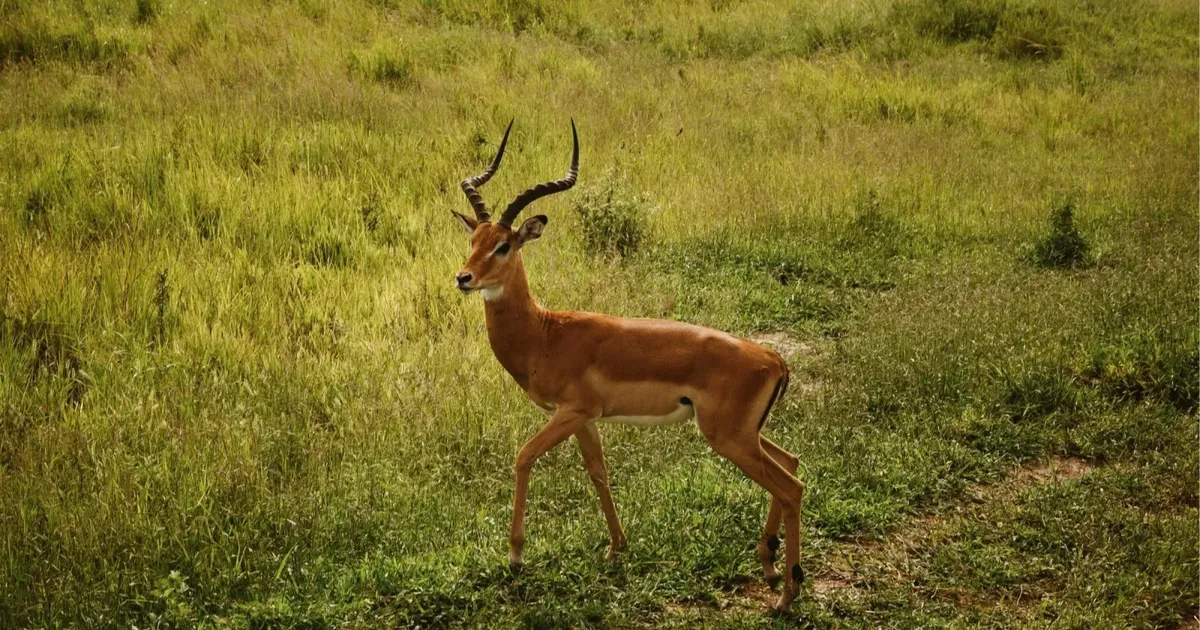
January and February are a good time for a Mikumi day safari from Zanzibar, as long as you expect some rain. Mikumi usually gets a drier spell between the short rains and the long rains, but it is not a dry season: rain still falls on several days a month, mostly as short afternoon storms. Zanzibar is in its hot, mostly dry beach weeks at the same time.
Check Availability
For January and February 2027 our pick is a weekday after 5 January, at least two nights before your flight home, with a rain jacket in your bag. Check your date in the booking box below, because prices and seats on the small planes change.
Key facts at a glance
| Item | January and February |
|---|---|
| Weather in the park | Hot and humid, green, with afternoon storms on some days and many bright mornings |
| Average high and low | About 32 to 33°C and 22°C at Morogoro, the nearest weather station |
| Rainy days | About 6 to 7 in January and 6 in February at Morogoro; more in the park on modelled data |
| Zanzibar | About 5 to 6 rainy days in January and 3 to 4 in February |
| Wildlife | All the main animals, young antelope, elephants moving in from the Selous, peak birding |
| Day-trip price | From $430 per person for a shared fly-in day trip on the listings we track |
| Flight | About 45 minutes to an hour each way to Kikoboga airstrip |
| Main caution | Afternoon storms can delay the return flight; the high-risk flight window is April to June |
| Ramadan 2027 | Expected to begin around 8 February 2027 |
What does the data say about Mikumi weather in January and February?
Mikumi in January and February is hot, humid and wet on some days. It sits between the short rains of November and December and the long rains of March to May. Every long-term dataset we checked shows rain in both months; they disagree on how much.
Two sources matter most:
- Morogoro, the nearest weather station. The WMO climate normals for 1991 to 2020, submitted by the Tanzania Meteorological Authority, are the official long-term record. Morogoro is about an hour by road east of the park, so its figures show the pattern of the year, not the weather on the floodplain on a given day.
- Weather Spark’s model for Mikumi. Weather Spark reconstructs the weather at the park itself from 1980 to 2016 data. It is a model, not a station, and it reads wetter than Morogoro.
Mikumi weather: January and February at a glance
| Measure | January | February | Source |
|---|---|---|---|
| Average high | 32°C | 33°C | Morogoro, WMO normals 1991–2020 |
| Average low | 22°C | 22°C | Morogoro, WMO normals |
| Rain in the month | 100 mm | 78 mm | Morogoro, WMO normals |
| Rainy days (1 mm or more) | 6 to 7 | 6 | Morogoro, WMO normals |
| Average high in the park (modelled) | About 31°C | About 31°C | Weather Spark, Mikumi, 1980–2016 |
| Rain in the park (modelled) | About 137 mm | About 135 mm | Weather Spark |
| Days with rain in the park (modelled) | 16.7 | 14.4 | Weather Spark |
| Chance of a wet day | 58% at the start of the month, falling to 52% by the end | Slightly lower | Weather Spark |
| Cloud cover | The cloudiest month of the year, overcast or mostly cloudy about 81% of the time | Still mostly cloudy | Weather Spark |
| Humidity | Muggy on most days; relative humidity quoted at 69 to 83% depending on the source | Similar | Weather Spark, climate-data.org, Weather Atlas |
| Daylight | About 12.5 hours | About 12.5 hours | Day length stays within 33 minutes of 12 hours all year |
| Sunrise and sunset | About 06:25 and 18:55 | About 06:35 and 18:55 | Our approximation for Mikumi (EAT, UTC+3); check a sun calculator for your date |
For context: at Morogoro, December gets 91 mm over about 7 rainy days, March 142 mm over 12 and April 204 mm over 18. So February is drier than both December and March, and January sits close to December. Weather Spark’s model shows January and February level with December (about 140 mm over 16.2 days) and well below March and April. On either dataset, January and February are drier than the long rains, not dry.
How the other weather sites compare
| Source | January rainfall | Rain days | Our take |
|---|---|---|---|
| Morogoro, WMO normals 1991–2020 | 100 mm | 6 to 7 | The official station record; an hour from the park |
| Weather Spark (model, 1980–2016) | 137 mm | 16.7 | Modelled for the park itself; consistent month to month |
| climate-data.org | 109 mm | 11 | Close to the station record |
| Weather2visit | 174 mm | 17 | Wetter, in the same range as Weather Spark |
| Weather Atlas | 238 mm | 28.8 | An outlier: rain on 29 of 31 days does not match what operators report |
| Sunheron | 10 mm | 2 | Almost certainly an error: the same page gives 124 mm for February |
| Wanderlog | About a 45% chance of rain per day | — | Calls January the wettest month; its 28°C highs look low against the others |
What this means for you: ignore the extremes. Expect roughly 80 to 175 mm a month, with rain on somewhere between 6 and 17 days depending on the dataset. On a day trip you may see a shower, but a full day of rain is unusual. SafariBookings’ climate page says the same: in January and February “it’s rare to experience rain all day. Afternoon showers are common.”
Why do some sources call January and February the “short dry season”?
The phrase comes from northern Tanzania and the coast, and it gets copied onto Mikumi. Inland, the gap between the two rainy seasons is weaker.
Three things are going on:
Northern Tanzania has a clear short dry spell. Around the Serengeti and Arusha, the short rains fall in November and December, a drier lull follows in January and February, and the long rains run from March to May. Many safari websites apply that calendar to the whole country.
Zanzibar is drier in January and February. The island gets rain on about 5 to 6 days in January and 3 to 4 in February, against about 18 in April. Operators selling Zanzibar-and-Mikumi trips lead with the island’s weather.
Mikumi’s own pattern is unclear, even in the research. Mikumi lies in Kilosa District, Morogoro Region, and published studies describe the area in different ways:
- One study calls Kilosa bimodal, with short rains from October to December and long rains from January to May. That would put January at the start of the long rains.
- Benjaminsen and colleagues (2009, “The Kilosa Killings”) also call Kilosa bimodal, but put the short rains in November and December and the long rains from mid-February to April. That places January in a gap.
- A study of precipitation and temperature trends in Kilosa District, using CHIRPS satellite rainfall data, describes the rainfall regime as unimodal: one long wet season.
When researchers disagree on whether there is a gap between the rains at all, the dry spell is too faint to plan a trip around.
The park and the camps describe it in different ways. The Tanzania National Parks brochure for Mikumi describes a definite dry period between January and February. Vuma Hills Tented Camp, inside the park, says the wet season “begins in January”. SafariBookings rates January and February as “Fair” for wildlife viewing, better than March and April (“Poor”) and below June to October (“Excellent”). GetYourGuide’s explorer guide goes furthest the other way, saying the park “sees minimal rain”, with “generally clear” skies and sparse vegetation. The station record and the model both show more rain than that.
Our verdict: treat January and February as a usual drier spell between the short and long rains, not a guaranteed dry season. Expect warm days, rain on some of them, bright mornings and afternoon thunderstorms.
What is the weather like in Zanzibar in January and February?
Zanzibar is in its hot, mostly dry weeks, one of the island’s best beach periods. The contrast with green, cloudy Mikumi is part of the appeal.
| Zanzibar | Mikumi | |
|---|---|---|
| Rainy days in January | About 5 to 6 | 6 to 7 at Morogoro; about 17 in the park on modelled data |
| Rainy days in February | About 3 to 4 | 6 at Morogoro; about 14 in the park on modelled data |
| Daytime highs | About 30 to 31°C | 32 to 33°C at Morogoro; about 31°C modelled for the park |
| Feel | Sea breeze, hot sun, warm sea | Humid and still, with big inland clouds |
Zanzibar and Morogoro figures from the WMO climate normals for 1991 to 2020; park figures from Weather Spark’s model.
The UK Foreign Office’s Tanzania advice puts the rainy seasons at “the end of March to May” and “October to mid-December”, so January and February fall between them on the coast. In practice: spend your sunniest days on the beach and give one day to Mikumi. If the forecast shows a large storm system over the mainland, most operators will move your date; the flight section below explains how.
What wildlife can you see in Mikumi in January and February?
All of Mikumi’s headline animals live in the park year-round. In January and February you give up the dry-season crowding at waterholes and get greener scenery, newborn antelope and good elephant numbers. Our guide to what Mikumi National Park is covers the animals in more depth.
What is different at this time of year
- Elephants move in. Safari specialist Aqua-Firma notes that elephants are common “especially in December and January after the short rains, when they tend to move into the area from the Selous Reserve.” Look on the Mkata floodplain.
- Young animals. You often see young impala, zebra, wildebeest and warthog in the green season, and the predators notice them too. Lions on the Mkata floodplain and around Mwanambogo are the park’s biggest draw.
- Long grass in places. Grazed plains can still give clear views. Longer grass along drainage lines and woodland edges hides cats and smaller antelope. Lions on termite mounds and elephants, giraffes and buffalo are easy to see. Leopards are hard to find in any season.
- Animals spread out. With water everywhere, the herds no longer gather at the last pools as they do in September and October. That is the main reason January and February rate below the dry season for game viewing.
Myth check: is January calving season in Mikumi?
No, not in the famous sense. The great wildebeest calving, with hundreds of thousands of births in a few weeks, happens on the short-grass plains of the southern Serengeti and Ndutu, roughly from late January to February. Mikumi has resident wildebeest and you may well see young ones, but there is no mass calving. Some Mikumi operator pages blur this (“calving season, typically between January and February”), so set your expectations by the Serengeti event, not the marketing.
Mikumi’s special species
- Eland: Africa’s largest antelope, regularly seen on the plains.
- Greater kudu, sable antelope and Lichtenstein’s hartebeest: mainly in the miombo-wooded foothills. Possible, but not routine on a day trip from the airstrip area.
- African wild dog: present but rare. Treat a sighting as a stroke of luck.
- Hippos and crocodiles: reliable at the hippo pools near the main gate area.
- Rhino: not present. Mikumi is not a Big Five park.
Is January–February the best time for birding in Mikumi?
Yes. November to February is Mikumi’s best birding window, and January and February sit inside it. SafariBookings names November to February as best for birders and notes that Palearctic migrants are present from November to April. The park records more than 400 species.
Why the birding is good now:
- European and Asian migrants such as wood sandpiper, common greenshank, European roller, barn swallows and European bee-eaters join the residents; sightings vary from year to year.
- Breeding plumage on resident weavers, bishops and widowbirds puts red, yellow and black into the long grass.
- Water everywhere draws waders, storks and herons.
Where to look:
- Hippo pool: hamerkop, African fish eagle, egrets and herons.
- Mwanambogo Dam: African spoonbill, openbills and waders.
- Mkata River and floodplain: African openbills fishing, yellow-throated longclaw, black-bellied bustard.
Species to look for: lilac-breasted roller, bateleur, southern ground hornbill, northern carmine bee-eater, purple-crested turaco, malachite kingfisher, yellow-throated longclaw, pale-billed hornbill and Dickinson’s kestrel, a southern speciality.
Tip: shared day trips concentrate on mammals. If birds matter to you, choose a small vehicle and tell the operator in advance. Our Mikumi birding guide has the migrant table and a one-day checklist.
How much does a Mikumi day trip cost in January–February 2027?
From $430 per person for a shared fly-in day trip on the listings we track, with return flights, the park fee, a guided game drive and lunch included. Prices are the same as in the rest of the season; the camps’ festive premium ends on 4 January.
Day-trip prices on the listings we track
| Listing | Price per person | Format | Rating |
|---|---|---|---|
| Mikumi Day Safari from Zanzibar with Flights & Lunch | From $430 | Shared fly-in with lunch | 4.7/5 from 3,171 reviews |
| 1-Day Mikumi National Park Fly-In Safari from Zanzibar (Viator) | From $500 | Fly-in with lunch | 4.96/5 from 348 reviews |
| Mikumi Day Safari by Twin-Engine Plane from Zanzibar | From $525 | Shared, twin-engine aircraft, six guests per 4x4 | 4.7/5 from 158 reviews |
Prices change often and depend on group size and date, so check the live listing.
The $430 shared trip suits most visitors; the $525 twin-engine trip suits you better if a smaller vehicle matters more. A private vehicle costs more again, and our guide to private vs shared day trips explains what the extra buys. The full breakdown is in what a Mikumi day trip costs and includes.
What is usually included
- Hotel pickup and drop-off on Zanzibar, on the options that include transfers
- The return flight between Zanzibar and Kikoboga airstrip, about 45 minutes to an hour each way
- The Mikumi park fee
- A game drive in a 4x4 with a driver-guide
- Lunch and drinking water
Usually not included: tips, alcoholic drinks and travel insurance, including Tanzania’s mandatory inbound policy (see below).
Mikumi park fees
The park fee is $30 per adult and $10 per child per day under the Tanzania National Parks tariff used across this site, and the day-trip price normally includes it. Wild to Sea’s 2026 park-fees guide reports that the parks authority has proposed a 15% annual rise in conservation and concession fees for five years, from 2026/27 to 2030/31. We could not confirm that any rise is in force for Mikumi as of October 2026, so ask your operator whether a quote includes the fee.
Staying overnight after 5 January
The two camps inside the park drop their festive rates on 5 January 2027. Stanley’s Kopje charges from $295 per person per night on its game package, and Vuma Hills Tented Camp from $285 per person per night on full board, against $320 and $310 over the festive fortnight; park fees are usually extra. Stanley’s Kopje opens from 1 June to 28 February, so February is its last month before the long rains. It sits on Mikumi’s only raised kopje, above the Mwanambogo waterhole, which makes it our pick for a February night. Our guide to one day vs two days in Mikumi compares the two plans.
Will rain cancel my flight to Mikumi in January or February?
Cancellations are possible but uncommon in January and February; delays and changed times are more likely. The high-risk window is April to June. Plan a buffer and you will usually be fine.
What the operators and airlines say:
- Operators flag April to June, not January and February. The operator of the most-reviewed day trip warns that “between April 1st and June 1st, weather or airfield conditions may necessitate postponement or advancement of the safari.” The twin-engine trip names April to June for last-minute flight changes. Neither listing carries a January or February warning.
- The buffer rule. The operator of the $430 shared day trip recommends a return to Zanzibar “no later than 2 nights before (international) departure from the island.” We apply it year-round.
- The operator handles refunds, not the airline. Most listings promise another date or a full refund if weather cancels the trip. The bush-airline tickets underneath are usually non-refundable, and Coastal Aviation, for example, calls its flight times “estimates only” and does not cover weather delays or missed connections. Book through a platform with clear cancellation terms; the listings here offer free cancellation up to 24 hours before.
- Afternoon storms affect the return flight more than the outbound. Morning flights usually go in clearer air, so keep the evening of safari day free.
Our guide to weather cancellations and free cancellation covers the terms in detail.
Kikoboga airstrip safety, in brief. On 28 November 2023, two Embraer EMB-120 turboprops, Unity Air’s 5H-MJH and Sindbard Air’s 5H-FLM, had separate landing-gear collapses at Kikoboga on the same day. Both aircraft were badly damaged and no one was injured. The cases went to Tanzania’s Aircraft Accident Investigation Board, and day trips continued afterwards. You can ask your operator which airline and aircraft type it uses; our guide to flying to Mikumi by light aircraft explains what to ask.
Road conditions and black cotton soil
Mikumi’s floodplain soils turn sticky after heavy rain. The UK Foreign Office warns that national-park dirt roads “can become hazardous or impassable after heavy rain.” In January and February the main game-drive loops are normally open, but guides may avoid some low-lying tracks, which is another reason the drives concentrate on the hippo pool and the main Mkata loops. The flying vs driving comparison explains why the road route does not work as a day trip.
What about Ramadan 2027, Revolution Day and festivals?
Ramadan 2027 is expected to begin on Monday 8 February 2027, with Eid al-Fitr on Tuesday 9 or Wednesday 10 March, according to astronomical calculations reported in the UAE. Final dates depend on the moon sighting. Ramadan changes the feel of Zanzibar more than it affects your safari.
Ramadan in Zanzibar: what visitors need to know
- Safaris and tours run as normal. One Zanzibar ground handler notes that “sightseeing tours and excursions will continue as scheduled,” though there are fewer places to eat outside hotels.
- Daytime eating outside hotels is restricted. Under the Zanzibar Commission for Tourism’s 2026 guidelines, restaurants and food outlets outside hotel premises closed during daylight and reopened after sunset for iftar. Expect similar rules in 2027.
- Hotels and beach resorts carry on for guests. Food and drink, including alcohol at licensed resorts, continue on the premises for registered guests.
- Do not eat, drink or smoke in public during the day, especially in Stone Town and the villages. The UK Foreign Office advises avoiding “eating or drinking in public, outside of hotels or restaurants.”
- Dress modestly away from the beaches and hotels. The Foreign Office notes that the Zanzibar authorities can fine visitors “700 US dollars or more” for clothing judged inappropriate in public.
- Your Mikumi day: you are on the mainland in a safari vehicle and lunch is provided. Be discreet with snacks and water around your driver-guide, who may be fasting, and consider a larger tip.
Other dates to plan around
| Date | Event | What it means |
|---|---|---|
| Up to 4 January 2027 | Festive rates end | Camp rates in the park drop from 5 January |
| Early January | Mapinduzi Cup football tournament | Lively evenings in Zanzibar Town |
| Tuesday 12 January 2027 | Zanzibar Revolution Day, a public holiday | Official celebrations; some offices and shops close. Tours usually run |
| About 8 February to 9 March 2027 | Ramadan (expected) | See above |
| 19 to 21 March 2027 | Sauti za Busara music festival, Stone Town | Moved out of February for 2027. The organisers shifted it from 11–14 March to 19–21 March “in consideration of the Holy month of Ramadhan and the Eid celebrations” |
Heads-up: many older articles still say Sauti za Busara happens every February. For 2027 that is wrong. If you planned a February trip around it, the late-March dates bring you close to the long rains in Mikumi.
Who should visit Mikumi in January–February, and who should not?
Go in January or February if you care about scenery, birds, photography and price. Choose June to October if a dry-season game drive, with the animals gathered at the water, is your one chance at a safari. Our month-by-month timing guide compares every season.
Good for
- Zanzibar beach holidaymakers who want one day in the wild without giving up sunny beach days.
- Birders and photographers: migrants, breeding colours, green backgrounds and storm light.
- Travellers watching their budget who go after 5 January, when the camps’ normal rates are back and the park is quieter.
- Second-time safari-goers who have done the dry season and want to see the park green.
Think twice if
- You fly home the next day. There is no room for a weather change.
- You struggle with heat and humidity: expect 30°C and more, with sticky afternoons.
- Big cats are the only goal and this is your one safari. The dry season gives better odds.
- You travel with very young children who find early starts and long, hot drives hard; our guide to a Mikumi day safari with children covers the ages it suits.
One day or overnight in January–February?
If you can, stay a night in February. A night gives you a late-afternoon and an early-morning drive, away from the midday heat, and a built-in buffer if a storm delays your arrival. February is Stanley’s Kopje’s last month before it closes. If a day trip is all you have time for, book it early in your Zanzibar stay, so a weather postponement still fits. If you are still deciding whether to go at all, read is a Mikumi day safari worth it.
Mikumi vs Nyerere vs the northern circuit in January–February
| Mikumi | Nyerere (Selous) | Serengeti and Ndutu | |
|---|---|---|---|
| Access from Zanzibar | About 45 minutes to an hour by air; an easy day trip | Short flight; a day trip is possible | Longer flights; several days |
| January–February highlight | Green plains, elephants, birds | Boat safaris on the Rufiji, birds | Wildebeest calving, late January to February |
| January–February weather | A drier spell, with rain on some days | Rain on some days | Short dry spell, more reliable |
| Budget | Lowest | Middle, with a higher park fee | Highest |
Bottom line: if the calving is your dream, go north, the one region where the short dry season label fits. For a single day away from the beach, Mikumi is the easiest choice. Our Mikumi vs Nyerere comparison and Mikumi vs Saadani comparison go further.
A typical January–February day-trip itinerary
| Time (approximate) | What happens |
|---|---|
| Before dawn | Hotel pickup; the time depends on where you stay, see our hotel pickup guide |
| About 07:45 | Flight leaves Zanzibar |
| About 08:30 | Land at Kikoboga airstrip, short briefing, game drive in the cooler morning |
| About 12:30 to 13:00 | Lunch, often before the afternoon clouds build |
| Early afternoon | Final game drive |
| About 14:30 | Back at the airstrip |
| About 15:00 | Flight to Zanzibar |
| About 17:00 to 18:30 | Back at your hotel, depending on where you stay |
Timings vary by operator. One traveller review mentions a one-hour flight delay that cut the time in the park, another reason to choose a well-reviewed operator. Our hour-by-hour day-trip itinerary has the full detail.
Health and comfort: malaria, tsetse flies and heat
- Malaria: the risk exists all year in Mikumi and on Zanzibar, and mosquitoes are more active in the rainy months. Speak to a travel clinic about antimalarials before you go and use repellent, especially at dawn pickups and at dusk. Our malaria and yellow fever guide has the details.
- Tsetse flies: present in Mikumi’s wooded areas. The bite is painful but rarely more than that for visitors. Dark blue and black clothing attracts them, so wear light long sleeves.
- Heat: with highs above 30°C and high humidity, drink plenty, and wear a hat and high-SPF sunscreen even on cloudy days.
What to pack for Mikumi in January–February
- A light, packable rain jacket
- Breathable long sleeves and trousers in khaki, beige or olive
- A wide-brimmed hat, sunglasses and SPF 50
- DEET or picaridin repellent
- Binoculars, essential for birding
- A camera with a zoom, and a dry bag or rain cover for it
- A small towel or wet wipes, and a refillable water bottle
- A modest outfit for Stone Town, with shoulders and knees covered, especially during Ramadan
- Your passport and proof of Tanzania’s mandatory inbound insurance
The full packing list covers the rest.
Photography tips for the green season
- Shoot storm light: dark clouds behind sunlit elephants or giraffes make the classic January photograph.
- Use the green: a lower angle puts animals against clean green grass, away from a cluttered horizon.
- Shoot in the morning: the air is clearer and the light softer before the cloud builds.
- Protect your gear: a shower can arrive within minutes in an open-sided vehicle.
Entry essentials: the new mandatory travel insurance
Since 1 October 2026, most foreign visitors entering mainland Tanzania need a government inbound travel insurance policy costing the Tanzanian-shilling equivalent of $44, valid for up to 92 days. The legal basis is Government Notice No. 256 of 2026, and the National Insurance Corporation (NIC) runs the scheme. Zanzibar has its own equivalent, run by the Zanzibar Insurance Corporation (ZIC). Children aged 3 to 17 pay $22, under-3s are free, and residents of the EAC and SADC are exempt.
For Mikumi day-trippers based on Zanzibar: you buy the policy at your first point of entry. If you fly into Zanzibar you buy the ZIC policy, and NIC says you do not have to buy a second one for the mainland. Neither scheme replaces your own comprehensive travel insurance. Our Zanzibar and Tanzania insurance guide has the current rules.
Tipping and travelling with children
- Tipping: a common guideline for a day trip is about $10 to $20 per guest for your driver-guide, in cash (US dollars or shillings) at the end of the day. Tip more for a private vehicle or an exceptional day, and during Ramadan.
- Children: children pay the reduced park fee of $10, normally already in the day-trip price. Some listings set minimum ages, so check before booking. Pack snacks, a hat and something to do on the flight; February heat can tire small children.
Frequently asked questions
Is January a good time for a safari in Tanzania? Yes, especially in the north, where January and February bring a short dry spell and the wildebeest calve in the southern Serengeti. In Mikumi, January is a good month, though not the peak: green, warm and very good for birds, with rain on some days.
Is January–February the dry season in Mikumi? No. It is usually a drier spell between the short and long rains, not a dry season. Morogoro, the nearest weather station, averages 100 mm of rain in January and 78 mm in February over about 6 rainy days each, and models for the park itself show more. The rain usually comes as short afternoon storms.
What is the weather in Mikumi in February? Hot and humid: average highs of about 33°C and lows of 22°C at Morogoro, about 78 mm of rain over 6 rainy days there, and a mix of sunny spells and afternoon thunderstorms.
Is Mikumi wetter than Zanzibar in January? Yes. Zanzibar averages about 5 to 6 rainy days in January, Morogoro 6 to 7, and Weather Spark’s model for the park about 17.
Will my Mikumi day trip be cancelled because of rain? It is possible but uncommon in January and February. Operators name 1 April to 1 June as the main disruption window. If weather cancels your trip, most operators offer a new date or a full refund.
How much is a Mikumi day trip from Zanzibar in January 2027? From $430 per person for a shared fly-in day trip on the listings we track, including flights, the park fee, the game drive and lunch. Private vehicles cost more.
Can I see the wildebeest calving in Mikumi? Not the mass event, which happens in the southern Serengeti and Ndutu. Mikumi has resident wildebeest, and you may see young ones.
Does Ramadan affect Mikumi safaris? Safaris and flights run as normal. On Zanzibar, restaurants outside hotels close during daylight, and visitors should not eat or drink in public during the day.
When is Sauti za Busara 2027? 19 to 21 March 2027 in Stone Town. The organisers moved it out of its usual February slot because of Ramadan and Eid.
How many nights before my international flight should I do the trip? At least two nights before, as the operator of the most-reviewed day trip recommends.
How we checked this guide: weather figures come from the WMO climate normals for 1991 to 2020 for Morogoro (station 63866) and Zanzibar (63870), submitted by the Tanzania Meteorological Authority, set against Weather Spark’s 1980–2016 model for Mikumi and the other sites named in the table; the Kilosa rainfall studies and the camps’ and SafariBookings’ season descriptions as quoted; day-trip prices and ratings from the GetYourGuide and Viator listings this site tracks; camp rates from the published 2026/27 rate tables and Stanley’s Kopje’s opening dates from Expert Africa; the park fee from the tariff used across this site; the insurance rules from Government Notice No. 256 of 2026 and UK Foreign Office advice; Ramadan 2027 from astronomical calculations reported by The National, and Sauti za Busara 2027 from Busara Promotions. Prices, fees and rules change, so confirm before you book.
Ready to pick a January or February date? Every safari we list carries free cancellation up to 24 hours before departure. Compare them all.
See Tanzania's Big Game — and Sleep on Zanzibar Tonight
Join 3,000+ travellers who have flown Zanzibar–Mikumi and back in a day. Return flights, park entry and landing fees, a shared 4x4 game drive and a bush lunch are all included. Free cancellation up to 24 hours before.
Check Availability & Book