Mikumi National Park Explained: The Mkata Floodplain and the "Mini Serengeti" Label
The park behind the day trip from Zanzibar: the Mkata Floodplain, what the "mini Serengeti" nickname gets right and wrong, and the highway that runs through the middle of it.
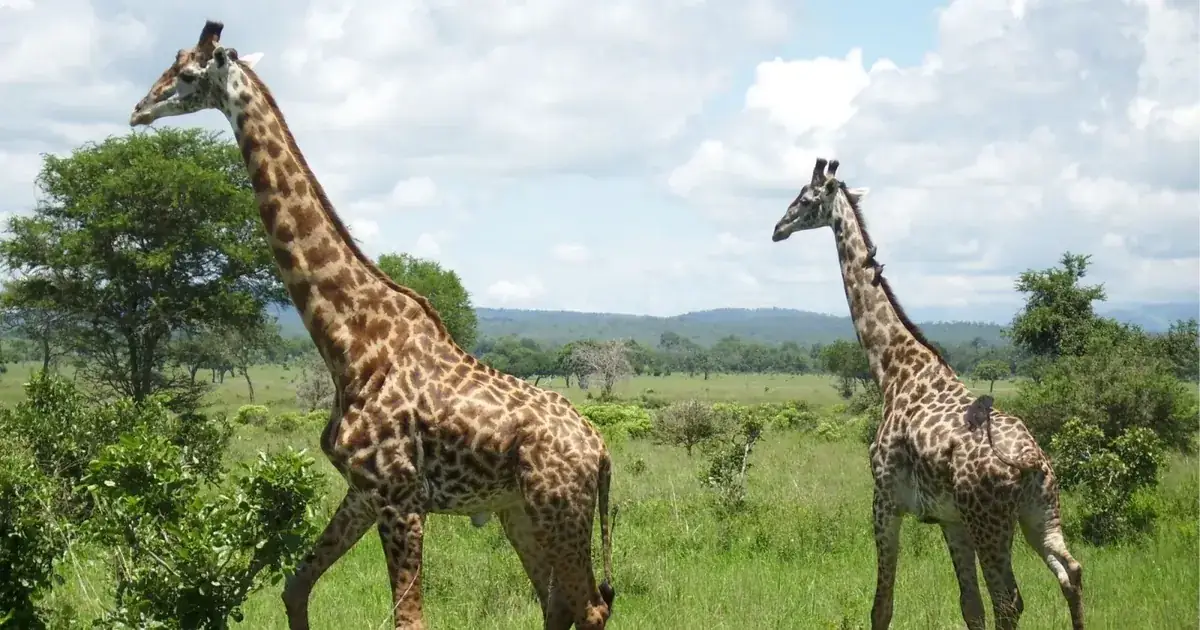
If you are weighing up a day trip to Mikumi from Zanzibar, it helps to understand the park you are going to: not the marketing version, but the real park, with its genuine strengths and its honest flaws.
Check Availability
Mikumi is a rewarding place to spend a day. It is also a park with a highway running straight through the middle of it, and a nickname that is earned in some ways and oversold in others.
Here is the fuller picture.
The basics
Mikumi National Park sits in the Morogoro Region of east-central Tanzania, a few hours’ drive inland from Dar es Salaam. It was gazetted as a national park in 1964 and enlarged in 1975 to its current size of around 3,230 square kilometres. It is commonly described as Tanzania’s fourth-largest national park, though several parks created or enlarged since 2019 have pushed it further down that list, so treat any ranking you read as dated.
What matters more than its rank is its position. Mikumi is not an isolated reserve. Its southern boundary meets the protected areas of Nyerere National Park and the Selous Game Reserve, and Tanzania’s wildlife surveys count the two as a single Nyerere–Selous–Mikumi ecosystem. That connection makes the park ecologically far more significant than its size suggests, because the elephants and other wildlife of that ecosystem range across both. If you are choosing between the two for a day out, we compare them directly in Mikumi vs Nyerere (Selous).
The Mkata Floodplain: the heart of the park
The reason most people visit Mikumi is the Mkata Floodplain, an open alluvial plain north of the highway that fills with water in the wet season and dries to golden grassland in the dry months. This is where the wildlife concentrates and where nearly all day-trip game drives take place, on a road circuit that loops through the plains.
The floodplain’s grasslands, dotted with acacia, baobab and borassus palms and ringed by distant mountains, are striking to look at, and they are the source of Mikumi’s “mini Serengeti” nickname. In the right light the comparison is easy to see: wide horizons, big skies, and herds of grazers spread across open country. How the plain changes between the wet and dry months, and what that does to your sightings, is set out in our month-by-month timing guide.
The “mini Serengeti” label: an honest assessment
This nickname does a lot of work in marketing copy. Here is a straight account of what it does and does not mean.
Where it’s earned: the landscape does echo the Serengeti. The open floodplain has the same wide, grassy, big-sky character, and the plains-game viewing is reliable: elephant, giraffe, zebra, buffalo and wildebeest are all readily seen, and eland are present too. Independent safari experts agree the scenic resemblance is real. And Mikumi delivers it at a fraction of the Serengeti’s cost, with far fewer crowds.
Where it’s oversold: the nickname is about scenery, not equivalence. Mikumi does not have the Serengeti’s wildlife density, its predator numbers, or anything like its great migration. Lions are present but less conspicuous, leopards are rarely seen, and there is no migration spectacle at all. Most tellingly, the sense of untouched wilderness that defines the Serengeti is undercut at Mikumi by the highway running through it. Independent expert reviewers, as opposed to marketing copy, score the park’s scenery and wilderness feel noticeably lower for exactly this reason.
The honest verdict: “mini Serengeti” is a fair shorthand for the look of the Mkata Floodplain, and for Mikumi’s role as an accessible, affordable, reliable introduction to the East African savannah. It is not a claim that you are getting the Serengeti in miniature. Understood that way, the park delivers what it should. If you expect a scaled-down Serengeti, you will be disappointed; if you expect a genuine, convenient taste of the savannah, you won’t be.
The highway through the park
Mikumi is one of the few Tanzanian national parks with a public highway running through it, and its highway is the busiest of them. The TANZAM highway, the main trunk road between Dar es Salaam and the Tanzanian interior and onward to Zambia and Malawi, crosses the park for around fifty kilometres. It shapes both the experience and the park’s character.
On the upside, that road is why Mikumi is so accessible. It is the easiest mainland park to reach, and visitors driving in can spot elephants before they have even paid the entrance fee. It is also the road any Mikumi trip routed through Dar es Salaam spends hours on, which is why we treat the fly-in and the Dar es Salaam routing as two different trips.
On the downside, it is a genuine ecological problem. Fast public traffic through a wildlife area kills a lot of animals. In 2025 the park’s chief warden put the average at around four hundred animals a year, about one a day, and the park recorded 482 deaths in 2021/22, its highest count on record. The problem has been documented by scientific research since at least the 1990s. In response, the park has introduced speed limits (lower at night, and lower again in high-wildlife stretches), speed bumps, warning signs, ranger patrols working with the traffic police, and routine litter collection along the road, since litter draws animals, especially monkeys, to the roadside. Drivers who hit wildlife face fines set per species, which run to thousands of US dollars for large animals such as elephant or giraffe.
The longer-term fix is a bypass that would divert through-traffic out of the park entirely, via a 141-kilometre road through Kilosa. It is about half built. The sections from Dumila to Kilosa are finished, but the final 72 kilometres from Kilosa to Mikumi were still waiting for funding in the government’s 2025/26 roads budget.
For a day visitor, the practical reality is this: most of your game viewing happens on the floodplain circuit away from the tarmac, so the road does not dominate the drive. But you will cross it, you will see it, and knowing it is there does temper the wilderness feeling for some people. It is the single biggest reason Mikumi carries a slightly second-tier reputation among safari purists, and you are better off knowing that before you go than discovering it on arrival. Our guide to what to expect on a Mikumi day safari covers the roadside signs and the rest of what the listings leave out.
A surprisingly well-studied park
One thing that rarely makes it into the marketing: Mikumi has a far deeper scientific record than its modest tourist profile suggests. Researchers began studying its yellow baboons in 1974, and one troop, habituated in 1975, has been observed ever since. That makes Mikumi one of a small number of long-running wild baboon study sites in Africa, alongside better-known projects such as Amboseli in Kenya. That long record also produced one of the earliest measurements of the highway’s toll: a study published in 1995 found that road deaths accounted for about a tenth of the yearly losses in baboon troops whose range included the road.
Conservation, honestly
Mikumi and its wider ecosystem were hit hard by the elephant-poaching crisis that swept the region in the early 2010s. Aerial surveys of the Selous–Mikumi ecosystem counted around 39,000 elephants in 2009 and about 13,000 in 2013, a loss of roughly two-thirds in four years.
The more recent news is cautiously good. The same surveys counted 15,217 elephants in 2014, 15,501 in 2018 and about 20,000 in 2022, the most recent count published. The share of elephant carcasses spotted during the surveys, one of the main indicators used to track poaching, fell from 16% in 2018 to under 1% in 2022.
Rhino, however, were poached out of Mikumi in the 1990s and have not been reliably seen since, although Tanzania National Parks has announced plans to reintroduce black rhino. That is one of the reasons a genuine “Big Five” day at the park is not possible, however the trip is marketed. See what you will see on a Mikumi day safari for what that means for your day.
Where Mikumi fits
The honest way to place Mikumi is this: it is not Tanzania’s best safari, and it does not need to be. It is the country’s most accessible mainland park, a reliable and affordable introduction to the savannah, and a very good day out for someone based on the coast who wants a real taste of the bush without committing to a full multi-day trip.
For a first-and-only Tanzanian safari with time and budget to spare, most experts would still point you north. For a day trip from Zanzibar, or as a stop on a longer southern-circuit journey towards Nyerere and beyond, Mikumi earns its place, as long as you arrive understanding what it is.
On this site, that day trip is the most-booked fly-in day safari from Zanzibar: $430 with flights, park fees and a bush lunch included, rated 4.66 out of 5 across 2,944 verified reviews, with the game drive on the Mkata Floodplain. If one day feels too short for a park with this much going on, the three-day ferry-and-train safari with a Maasai village visit starts at $570, rates 4.97 out of 5 across 25 reviews, and gives you a full day in the park. Whether a single compressed day suits you at all is the question we answer in is a Mikumi day safari worth it?
Frequently asked questions
Is Mikumi really like the Serengeti? In landscape, yes: the open Mkata Floodplain does resemble it. In wildlife density, predator numbers, migration and wilderness feel, no. The nickname is about scenery, not equivalence.
How big is Mikumi National Park? Around 3,230 square kilometres. It was gazetted as a national park in 1964 and enlarged in 1975. It is often described as Tanzania’s fourth-largest park, though newer parks have since pushed it down that ranking.
Why is there a highway through the park? The TANZAM highway is the main route between Dar es Salaam and the interior, and onward to Zambia and Malawi. It makes Mikumi very accessible but kills around four hundred animals a year, which the park is working to reduce, and a bypass road around the park is about half built.
Does the highway ruin the safari experience? Not for most day visitors. Game drives happen mostly on the floodplain away from the road. But you will see and cross it, and it does slightly reduce the wilderness feel.
What’s the Mkata Floodplain? The open, seasonally flooded grassland north of the highway where most of the wildlife concentrates and where day-trip game drives take place.
Ready to see the floodplain for yourself? Every safari we list books with free cancellation up to 24 hours before departure — compare them all.
See Tanzania's Big Game — and Sleep on Zanzibar Tonight
Join 2,700+ travellers who have flown Zanzibar–Mikumi and back in a day. Return flights, park entry and landing fees, a shared 4x4 game drive and a bush lunch are all included. Free cancellation up to 24 hours before.
Check Availability & Book