Mikumi in November: Short Rains, Green Plains and the Day Trip
Is November good for a Mikumi day safari from Zanzibar? Rain and heat by the numbers, what the short rains change for wildlife and flights, prices, and the insurance rule from 1 October 2026.
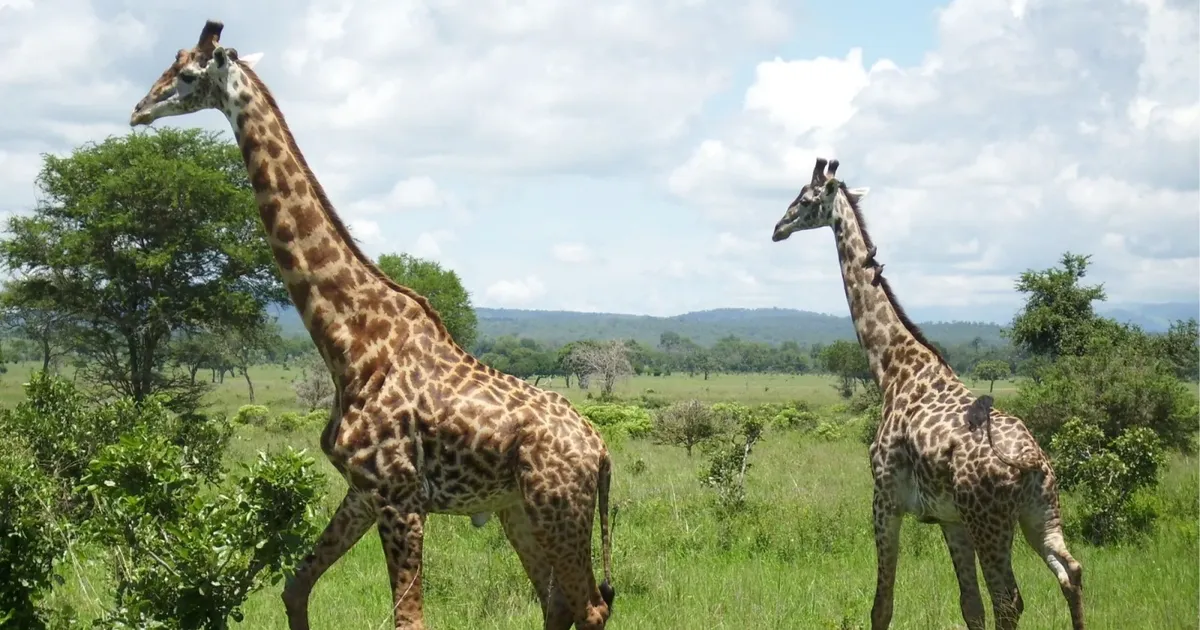
Yes, the fly-in day trip from Zanzibar to Mikumi works in November. The short rains usually come as afternoon thunderstorms, so the morning game drive, the best part of the day, is rarely lost. You get a green, quiet park, migrant birds, young antelope and low-season lodge rates; you give up some of the easy visibility of the dry season and accept a small chance that the weather moves your flight.
Check Availability
Our pick for November is a well-reviewed shared trip with free cancellation, booked at least two nights before you fly home. Prices change with demand, so check your date in the booking box below.
Mikumi in November at a glance
The park has no long-term weather records of its own, so the climate figures below come from Morogoro, the nearest station with long-term records, about an hour east of the park by road. They show the pattern of the month, not a forecast for the floodplain.
| November | What it means for your day | |
|---|---|---|
| Average high | 32°C at Morogoro | Hot by late morning; bring a hat and SPF 50 |
| Average low | 21°C at Morogoro | Warm nights; the dawn flight and open vehicle can still feel cool |
| Rain | 53 mm in the month at Morogoro | The short rains, not the long rains of March to May |
| Rainy days | About 6 at Morogoro, about 14 on Zanzibar | The island is the wetter half of your trip |
| Sunrise and sunset | About 06:05 and 18:30 | You land well after sunrise and fly out well before dusk |
| Park entry fee | $30 per non-resident adult, $10 per child | Normally already in the tour price |
| Day-trip price | From $430 per person, shared | The same as in the dry season |
| Crowds | Low; shoulder season | In-park camps drop to low-season rates from 1 November |
A rainy day in these figures is one with at least 1 mm of rain. Our month-by-month guide puts November next to the rest of the year.
What is the weather really like in Mikumi in November?
November is the start of Mikumi’s wet season, but it brings the short rains, not the downpours of March to May. SafariBookings describes the start of the rains as unpredictable. When they do come, they are infrequent and usually arrive as afternoon thunderstorms, and rain that lasts all day is rare.
How hot is it?
Hot. November is among the warmest months of the year at Morogoro, with an average high of 32°C, and only December is warmer.
- Afternoons: about 32°C at Morogoro, and the midday sun on the open plain feels hotter.
- Nights: about 21°C.
- Dawn: this is when you take off from Zanzibar, and it can feel cool in an open vehicle after landing.
- Sun: there is little shade on the floodplain at midday.
How much does it rain?
Morogoro averages 53 mm in November, over about 6 rainy days. Weather sites that model the park itself put the month anywhere between about 50 mm (climate-data.org) and 96 mm (Sunheron), which brackets the Morogoro figure. One aggregator gives a total several times higher than every other source, and we leave it out.
In practice, plan for a few storms during your stay and probably none during your morning drive. The start of the rains also moves from year to year: in a late year, early November can still feel like the dry season.
What time of day does it rain?
Mostly in the afternoon, often as thunderstorms building after a clear, steamy morning. That suits the day-trip schedule: you land at about 08:30 and drive through the best wildlife hours before the clouds stack up.
What about Zanzibar in November?
Zanzibar has its own short rains at the same time, and the island has more rainy days than the park: about 14 in November on Zanzibar against about 6 at Morogoro. Expert Africa warns that the short rains on the coast “can still be heavy”. So the island is the damper half of your trip, and a Mikumi day does not swap a dry beach day for a wet safari.
What wildlife will I see in Mikumi in November?
The main animals are all still there: elephant, giraffe, zebra, buffalo, wildebeest, impala, hippo and, with luck, lion. November changes how you see them.
- The plains green up. The Mkata floodplain, Mikumi’s open grassland, turns from dust to fresh green. Grazers follow the new grass, and your photos get colour instead of beige.
- Young animals appear. Guides describe calves and lambs appearing on the plain from November, and one operator puts the peak of impala, zebra and wildebeest births in November and December. Treat that as a tendency, not a timetable.
- Elephants. Some guides report elephant numbers rising after the short rains as herds move in from the south; others say big herds are easiest to find in the dry season, when water is scarce. Both can be true: elephants are around, just less predictable.
- Lions. Mikumi is known for fairly reliable lion sightings on the Mkata floodplain, often on termite mounds. In November, fresh grass and new water let wildlife spread out, so sightings are good but less certain than in September and October. Leopards are rare in any month, and Mikumi has no rhinos, so do not expect the full Big Five.
- Hippo pools. The hippo pools are a fixture all year and a good place for waterbirds.
- Eland. Mikumi is one of the better places in Tanzania to see eland, the world’s largest antelope, on the floodplain.
Does tall grass make animals harder to spot?
A little, and more as the season goes on. In early November the grass is just sprouting, so visibility is close to dry-season levels. By late December and into the long rains it is taller and wildlife is more dispersed. If a lion is the one thing you must see, early November beats late November.
If you want more control over where the vehicle stops and how long it waits at a sighting, our guide to private vs shared day trips explains what a private vehicle changes.
Which migrant birds arrive in Mikumi in November?
November opens Mikumi’s best birding window. SafariBookings records more than 400 bird species in the park and says birding is at its best once migratory birds arrive in November; they stay until April. These are Palearctic migrants from Europe and North Africa. Birding is best from November to February, because heavier rain makes it harder in March and April.
Residents to look out for, many in breeding colours:
- Lilac-breasted roller
- Yellow-throated longclaw
- Bateleur
- African fish eagle
- Saddle-billed stork
- Marabou stork
- Southern ground hornbill
- Malachite kingfisher
- Northern carmine bee-eater
- Purple-crested turaco
At the hippo pool and the Mwanambogo dam, watch for African spoonbill, hamerkop and African openbill. A pair of 8×42 binoculars makes a real difference this month.
Will rain cancel my flight to Mikumi?
Usually not. Day-trip flights leave early, before the afternoon storms build. Weather can still delay, reschedule or occasionally cancel a light-aircraft flight, and how well you are protected depends on what you booked.
How do the flights work?
- Route: you fly from Zanzibar’s Abeid Amani Karume International Airport to Kikoboga airstrip (ICAO code HTMK) inside Mikumi National Park, in a light aircraft. Our guide to flying to Mikumi by light aircraft covers the planes and the airstrip.
- Flight time: about 45 minutes to an hour each way.
- Carrier: the airline, departure time and aircraft can change. Beach & Safari Holidays, the operator behind Mikumi Day Safari from Zanzibar with Flights & Lunch, reserves the right to change departure times or carrier for operational, weather or safety reasons.
What happens if weather cancels it?
Read the listing’s small print before you pay. A good weather clause looks like this:
- When the operator cancels for weather or unsafe flying conditions, you are offered another date or a full refund. Many GetYourGuide and Viator listings for this trip say so in writing.
- Free cancellation: the listings we recommend let you cancel for free up to 24 hours before departure.
- Beach & Safari Holidays flags weather and airfield disruption specifically for 1 April to 1 June, the long rains, not November. It also recommends returning to Zanzibar no later than two nights before your international departure, and it is not responsible for missed connections.
Our advice: book through a platform such as GetYourGuide or Viator, not a cash deal on WhatsApp, and keep a spare day in your Zanzibar plans. Some independent reviews complain about slow or missing refunds from small operators after cancellations, which is the risk platform protection is there to reduce. We go through the scenarios in what happens if weather grounds your flight.
Is Kikoboga airstrip safe? (The 2023 incidents, explained calmly)
You may come across reports from 28 November 2023, when two Embraer EMB-120 Brasilia turboprops had separate landing-gear accidents at Kikoboga on the same day:
- 5H-MJH, operated by Unity Air Zanzibar, was flying in from Zanzibar with 30 passengers and 3 crew. The crew reported a landing-gear problem on approach, the main gear collapsed on touchdown, and the aircraft left the runway.
- 5H-FLM, operated by Sindbard Air, was departing for Zanzibar about six hours later when its nose gear collapsed on the take-off run and it struck a building.
Nobody was reported injured in either accident, and day trips have continued since. If it worries you, ask the operator which airline and aircraft type they use; the twin-engine Mikumi day safari ($525, 4.7/5 from 158 reviews) names its two-engine aircraft and Kikoboga in its own itinerary.
How much does a Mikumi day trip cost in November?
Expect $430 to $525 per person for a shared fly-in day trip on the listings we track. Platform prices hardly change by season, but overnight lodges cost less in November.
| Listing | Type | Price per person | Rating |
|---|---|---|---|
| Mikumi Day Safari from Zanzibar with Flights & Lunch | Shared fly-in | From $430 | 4.7/5 from 3,162 reviews |
| 1-Day Mikumi National Park Fly-In Safari from Zanzibar (Viator) | Fly-in | From $500 | 4.96/5 from 348 reviews |
| Mikumi Day Safari by Twin-Engine Plane from Zanzibar | Shared, twin-engine aircraft | From $525 | 4.7/5 from 158 reviews |
| Zanzibar to Mikumi: 3-Day Safari with Maasai Village Visit | Overnight, by ferry, train and road | From $570 | 4.97/5 from 26 reviews |
Prices change often, so check the live price in the booking box. Our full cost breakdown adds back the costs the headline price leaves out.
What’s usually included?
- Return flights between Zanzibar and Mikumi
- A 4x4 safari vehicle with an English-speaking driver-guide
- Park fees
- Lunch, as a bush picnic or at a lodge
- Water
Hotel pickup is often included or offered as an option. Check whether park fees, hotel transfers and drinks are in your listing, because some listings leave out the transfer to the airport. Our guide to hotel pickups on Zanzibar has the times by beach area.
What are the park fees in November?
Mikumi’s entry fee does not change by season. Tanzania National Parks charges non-resident adults $30 a day and children $10, and on every listing on this site the fee is already in the tour price. TANAPA’s own web pages give different figures and do not agree on whether VAT is included, so if you book a bare-bones trip that leaves the fee out, ask the operator for the amount in writing before you pay. How Mikumi National Park works has more on the park itself.
What does a November day trip itinerary look like?
A typical schedule, based on the most-reviewed listing; times vary by operator and by where you stay:
| Time | What happens |
|---|---|
| About 05:00 to 06:00 | Hotel pickup (earlier from Nungwi and Kendwa in the north) |
| About 07:00 to 07:45 | Flight leaves Zanzibar |
| About 08:00 to 08:30 | Land at Kikoboga; the game drive starts straight away |
| About 08:30 to 13:00 | Morning game drive on the Mkata floodplain and at the hippo pools |
| About 13:00 | Lunch |
| About 13:30 to 14:30 | Afternoon drive (watch the sky) |
| About 14:30 | Back at the airstrip |
| About 15:00 | Flight to Zanzibar |
| About 16:00 to 17:30 | Back at your hotel |
November tip: the morning is the best part of the day. If your listing offers a choice between an early and a late departure, take the early one. Our hour-by-hour itinerary goes through the day in more detail.
Should I choose an open-sided or pop-top vehicle in November?
In November we would pick a pop-top 4x4 with closed sides if the listing offers one.
- Pop-top: the roof hatch gives you an all-round view, and you can close up quickly when a storm rolls in.
- Open-sided: good for photography in the dry months, but it leaves you exposed to sudden downpours and the midday sun.
Either way, a shared vehicle, often capped at six or seven people, works fine. A private vehicle lets you decide where to stop and how long to wait at a sighting.
What are the roads like after the rains?
Mostly fine in November, with mud on some tracks. The floodplain’s heavy clay turns slick after a storm, and guides may skip some loops after heavy rain and stay on the main graded circuit. Serious road problems come with the long rains from March to May, when some camps close because tracks become impassable. In November, a downpour mostly means a slower, bumpier afternoon.
What should I pack for Mikumi in November?
- A light, packable rain jacket for afternoon storms
- Layers: a fleece or long-sleeved top for the dawn flight and early drive
- Sun protection: wide-brimmed hat, SPF 50 and sunglasses, for highs above 30°C
- Insect repellent with DEET or picaridin, plus long sleeves and trousers in neutral colours
- Binoculars, which matter more than usual this month because of the birds
- A rain cover or dry bag for your camera, plus a spare battery
- Your passport, which is checked for the domestic flight, and proof of your entry insurance
- Cash in small US dollar notes for tips
- A soft bag only, because light aircraft have baggage limits; check yours with the operator
Our full packing list covers the rest.
Is malaria a bigger risk in November?
The risk is real all year in Mikumi, and the rains bring more mosquitoes. The CDC Yellow Book 2024 advises clinicians to consider malaria prophylaxis for all travellers going to Tanzania, and CDC lists transmission in all areas below 1,800 m, which includes Mikumi, with atovaquone-proguanil, doxycycline, mefloquine or tafenoquine as the recommended options. Even for a day trip, speak to a travel clinic before you go, use repellent and cover up at dawn. If you get a fever up to a year after your trip, tell your doctor you have been to Tanzania. Our guide to malaria and the Zanzibar–mainland crossing has the full picture.
Do I need the new Tanzania travel insurance for a Mikumi day trip?
Not a second policy. If you arrived in Zanzibar first and bought the Zanzibar (ZIC) policy, it also meets the mainland rule for your day at Mikumi.
- The rule: mainland Tanzania’s inbound travel insurance, set by Government Notice No. 256 of 2026, took effect on 1 October 2026. Foreign visitors who enter on the mainland buy a $44 policy from the National Insurance Corporation (NIC), valid for up to 92 days, and can be refused entry without one.
- One policy, first port of entry: the UK Foreign Office says “You only need to buy insurance for your first port of entry, either mainland Tanzania or Zanzibar”, and NIC says a visitor who entered through Zanzibar with valid cover there can travel on to the mainland without buying again.
- Zanzibar’s own scheme: ZIC insurance has been compulsory in Zanzibar since 1 October 2024, at $44 per adult and $22 per child aged 3 to 17.
Carry proof of your policy on the day trip. The mandatory policy is not a substitute for proper travel insurance with medical evacuation cover; our guide to Zanzibar’s insurance rules explains what it does and does not do.
How does November light work for photography?
November brings dramatic skies and saturated greens. The light is harder to shoot than the golden light of the dry season, but the results can be more striking.
- Shoot early. The light on the green floodplain between about 08:00 and 10:00 is lovely.
- Storm clouds behind elephants or giraffes make standout frames; expose for the sky.
- Bring a zoom in the 100–400 mm range for birds, and a rain cover.
- Fresh grass can hide low subjects, so ask your guide to position the vehicle with some height.
Is November cheaper for an overnight stay in Mikumi?
Yes. The Foxes group’s two camps in the park drop to low-season rates from 1 November to 23 December 2026.
- Stanley’s Kopje: $295 per person per night, against $320 from July to October 2026. Rates include breakfast, lunch, tea and dinner. It has 12 tents on a rocky hill overlooking the Mkata floodplain.
- Vuma Hills Tented Camp: $285 per person per night, against $310 in the peak months. It has 16 tents in the hills above the plains.
Park and concession fees are extra. If you want nights in the park without arranging them yourself, the three-day ferry-and-train safari with a Maasai village visit starts at $570 with two lodge nights, though from only 26 reviews so far.
One day or overnight in November?
One day works. Overnight is better if you can spare the time and the money.
- Day trip: best for most beach-based travellers. About six hours in the park, mostly before the afternoon storms, and no second hotel to pay for.
- Overnight: gives you a second chance if a storm cuts the afternoon short, plus the dusk and dawn drives when predators are most active, and a buffer if flights shift.
If seeing lions matters most to you, the overnight is the better bet. We compare the two in one day or two?
Mikumi or Nyerere (Selous) in November?
For a first, simple day safari, choose Mikumi. For a wilder feel with a boat safari, choose Nyerere.
- Mikumi: open grassland makes animals easier to spot, the entry fee of $30 a day is among the lowest of any major Tanzanian park, and shared day trips start at $430.
- Nyerere: the river and lake scenery is spectacular and you can add a boat safari, but entry costs more and the denser bush gets harder to search once it greens up.
Both work in November, and Mikumi is the more forgiving choice while the vegetation is growing. Our comparison of Mikumi vs Nyerere (Selous) goes into the details, and Mikumi vs Saadani covers the coastal alternative.
Who is November good for, and who should pick another month?
November suits:
- First-time safari-goers on a Zanzibar beach holiday who want one solid safari day
- Birders, because the migrants arrive and many residents are breeding
- Photographers who like green landscapes and stormy skies
- Travellers on a budget who want an overnight at low-season rates
- Anyone who dislikes crowds
Consider another month if:
- You need the best odds of lions and the most animals in one place. Choose September or October.
- Your trip is so tight that a weather delay would make you miss an international flight.
- You are very sensitive to heat or humidity.
Still deciding whether the day is for you? Read is the day trip worth it?
How do I book with free cancellation?
- Choose a listing that shows free cancellation up to 24 hours before departure.
- Read the “Know before you go” section for the weather clause. You want another date or a full refund.
- Book for early in your stay, at least two nights before your international flight.
- Watch for messages the day before. Tickets and pickup times are often sent then.
- Check the forecast 48 hours ahead. If it looks bad, rebook or cancel within the free window.
Our guide to booking a Mikumi safari from Zanzibar covers how far ahead to book.
Frequently asked questions
Is November a good time to visit Mikumi? Yes. It is a shoulder month: the park is greener and quieter than in the dry season, migrant birds arrive, and the camps in the park cut their rates. Rain usually falls as afternoon storms.
How much does it rain in Mikumi in November? Morogoro, the nearest long-term weather station, averages 53 mm over about 6 rainy days. Sites that model the park itself give roughly 50 to 96 mm. Most of it falls in the afternoon.
What is the temperature in Mikumi in November? At Morogoro the average high is 32°C and the average low 21°C.
Will my Mikumi flight be cancelled because of rain? Rarely. Flights leave early, before the afternoon storms. Good listings offer a new date or a full refund if weather cancels the trip.
Can I see lions in Mikumi in November? Often, especially on the Mkata floodplain. Wildlife spreads out after the rains, though, so sightings are less certain than in September and October.
How much is a Mikumi day trip from Zanzibar? Shared fly-in day trips start at $430 per person on the listings we track, and the twin-engine version costs $525.
Do I need extra insurance for a Mikumi day trip from Zanzibar? Not a second government policy. Since 1 October 2026, the ZIC policy you buy for Zanzibar also meets mainland Tanzania’s rule, because you buy for your first port of entry only. You still need your own travel insurance for the safari.
Is Zanzibar rainy in November too? Yes. Zanzibar’s short rains fall at the same time as Mikumi’s, and the island has more rainy days.
What should I wear on a November safari? Breathable, neutral-coloured layers, a light rain jacket, a hat, sunscreen and insect repellent.
Is Mikumi or Nyerere better in November? Mikumi’s open plains make it easier for a first day safari. Nyerere offers boat safaris and a wilder feel at a higher price.
Ready to pick your November date? Every safari we list carries free cancellation up to 24 hours before departure. Compare them all.
See Tanzania's Big Game — and Sleep on Zanzibar Tonight
Join 3,000+ travellers who have flown Zanzibar–Mikumi and back in a day. Return flights, park entry and landing fees, a shared 4x4 game drive and a bush lunch are all included. Free cancellation up to 24 hours before.
Check Availability & Book