Mikumi vs Ruaha from Zanzibar: One Day of Safari or Three Nights in the Wild?
Mikumi or Ruaha from Zanzibar? Flights, prices, lions, crowds and seasons compared, why Ruaha is not a day trip on scheduled flights, and which park to book for the time you have.
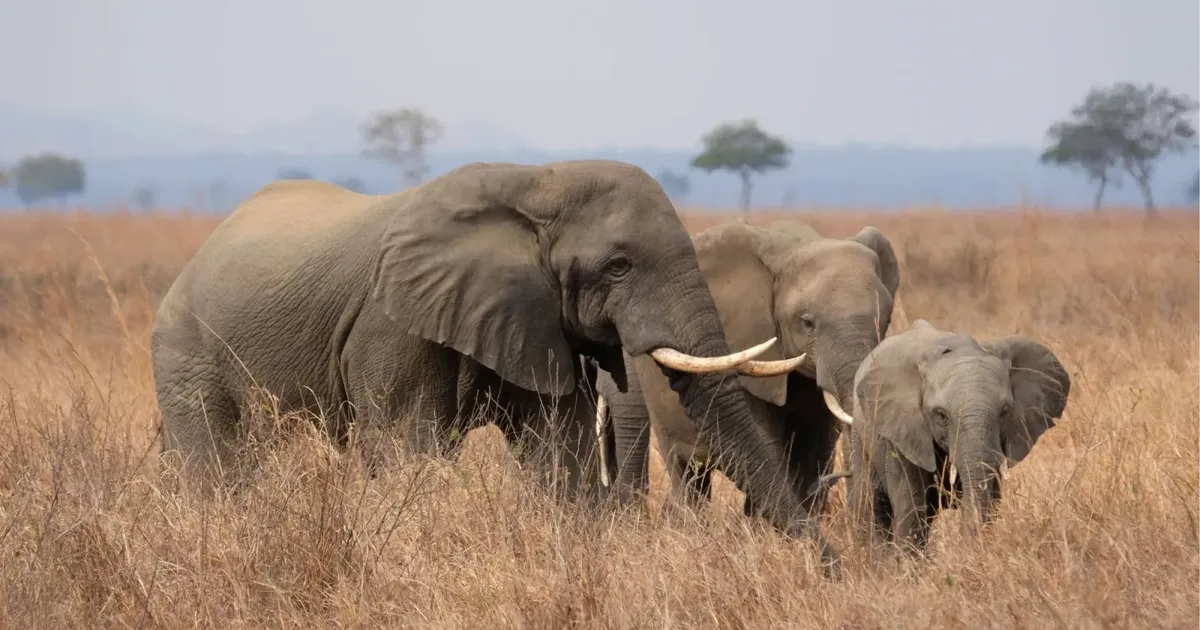
If you have one spare day on Zanzibar, pick the Mikumi fly-in day trip. Ruaha cannot be done as a day trip from Zanzibar on scheduled flights, so pick it only if you can give it at least three nights and about three to four times the budget. Ruaha is wilder and emptier, with far more predators and walking safaris; Mikumi is the easiest safari day you can take from the island.
Check Availability
For a single day, the shared fly-in trip to Mikumi is the one most travellers book. Check your date in the booking box below, because one price covers flights, park fees and lunch.
Mikumi vs Ruaha at a glance
| Mikumi National Park | Ruaha National Park | |
|---|---|---|
| Size | 3,230 km² | About 20,000 km² (20,226 km² in TANAPA’s brochure) |
| Rank | One of Tanzania’s bigger parks | Tanzania’s second-largest national park, after Nyerere |
| Visitors in 2023 | About 124,000 | About 21,000 |
| Time needed from Zanzibar | 1 day (or 1 to 2 nights) | 3 nights at least; 4 to 5 nights ideal |
| Flight from Zanzibar | About 45 minutes to an hour each way on day-trip flights | Scheduled: 07:50 to 11:00 via Dar es Salaam and Nyerere; back the same way |
| Typical cost | Day trip from $430 shared, $525 to $550 for smaller or open vehicles | 3-day fly-in about $1,580 to $3,100 per person; 4-day about $1,700 to $2,700 |
| Park fee (non-resident adult, per day) | $30 | $30, plus a $30 concession fee per night if you stay inside |
| Wildlife density | High and easy: open floodplain, short drives | Lower per km² but a huge variety; you work for sightings |
| Predators | Lions present; leopard and wild dog are luck | Big lion prides, leopard, cheetah, spotted and striped hyena, wild dog |
| Special species | Eland, buffalo, hippo pool | Greater and lesser kudu, sable, roan, Grant’s gazelle at its southern limit |
| Crowds | Moderate: the busiest southern park, but nothing like the Serengeti | Very low |
| Scenery | Mkata floodplain ringed by mountains | Great Ruaha River, sand rivers, baobab hills, miombo woodland |
| Activities | Vehicle game drive only on day trips | Game drives, walking safaris, fly-camping, some night drives |
| Families | Excellent for a first, short taste | Better for older children; long transfers and camp rules |
| Access | The easiest safari from Zanzibar | Remote; the flight network shrinks in the long rains |
| Our verdict | Best day trip | Best wilderness safari |
Can you do a Ruaha day trip from Zanzibar?
No, not on scheduled flights. Coastal Aviation’s published timetable (updated December 2025, valid to 31 May 2027) has a daily Zanzibar to Ruaha flight leaving at 07:50 and landing at 11:00, routed via Dar es Salaam and Nyerere (Selous). The Ruaha to Dar es Salaam flight leaves at 11:45. That gives you 45 minutes on the ground, which is not a safari.
A private charter could in theory fly a dawn-to-dusk Ruaha day. We found no major booking platform selling one in October 2026, and the cost and flying time count against it. Ruaha lies roughly twice as far inland as Mikumi, and once you land you are in a park of about 20,000 km² where sightings take driving time. If someone sells you a “Ruaha day trip”, ask exactly how many hours you will spend in the park.
What you can do in one day is Mikumi. Fly-in day trips leave Zanzibar between about 07:00 and 07:45, start the game drive by mid-morning and fly back between about 15:00 and 16:30, so you are back at your hotel in the early evening. See our Mikumi day safari itinerary and hotel pickup times for the hour-by-hour plan.
The shared trip, Mikumi Day Safari from Zanzibar with Flights & Lunch, costs from $430 and is rated 4.7 out of 5 from 3,190 reviews. Read our breakdown of this trip.
How big are Mikumi and Ruaha, and what do they look like?
Ruaha is about six times the size of Mikumi and much rougher country. TANAPA’s brochure gives Ruaha as 20,226 km², “making it Tanzania’s second largest National Park”, about the size of Wales. Mikumi covers 3,230 km². Nyerere, the largest, covers about 30,900 km².
The figures do not all agree. The Ministry of Natural Resources and Tourism’s 2023 Maliasili Statistical Bulletin lists Ruaha at 19,822 km² with a boundary “reviewed 2023”, while TANAPA’s brochure and almost every guide still use 20,226 km². We say “about 20,000 km²” where precision does not matter. You will also still see Ruaha called “Tanzania’s largest park”. That was true before Selous became Nyerere National Park, and it is not now.
The 2008 Usangu annexation added the Usangu Game Reserve and the wetlands at the Great Ruaha’s headwaters, roughly doubling the park from its original area of about 10,300 km². Ruaha also sits inside a larger protected landscape that, according to Abade and colleagues’ 2014 PLOS ONE paper, “encompasses more than 45,000 km²”, with the Rungwa, Kizigo and Muhesi game reserves and the MBOMIPA wildlife management area. That wider landscape is the area behind the famous lion figures.
What each park feels like:
- Ruaha: the Great Ruaha River runs along the park’s south-eastern edge for about 160 km. Wide sand rivers such as the Mwagusi and the Mdonya stay dry for most of the year. The hills are studded with baobabs, and miombo woodland takes over towards the west. The park sits where East African savanna meets southern African miombo, which is why its mix of species is so unusual.
- Mikumi: the Mkata floodplain is an open, grassy bowl framed by the Uluguru and Rubeho mountains, with the Dar es Salaam to Iringa highway running through the park. It is compact, open and easy to read, which is why it works so well in one day. See our Mikumi National Park explainer.
Is Ruaha really that empty?
Yes. Ruaha is one of Tanzania’s least-visited major parks. The ministry’s 2023 Maliasili Statistical Bulletin recorded about 21,000 visitors to Ruaha that year, roughly a third of them from abroad. Mikumi had about 124,000, and the Serengeti about 557,000.
On the ground, that means a sighting in Ruaha is often just you and the animal. In Mikumi you share the best sightings with a handful of vehicles, sometimes more on busy days. That is still nothing like a Serengeti river crossing.
Ruaha vs Mikumi lions: which is better for big cats?
Ruaha, clearly. In a 2014 PLOS ONE paper, Abade, Macdonald and Dickman describe the Ruaha landscape as “supporting over 10% of the world’s lions”, with the Rungwa-Ruaha region “harbouring an estimated population of 3,779 lions, representing one of four lion strongholds in East Africa.” The same paper says the region holds the third-largest population of endangered African wild dog in the world, and one of only four East African cheetah populations of at least 200 animals.
Read that statistic carefully. The “10% of the world’s lions” figure, repeated by the Ruaha Carnivore Project, applies to the whole Ruaha-Rungwa landscape, not only the national park, and it comes from a study published in 2014. It is still the standard reference, but it is a landscape-scale estimate, not a current park census.
What you are likely to see: Ruaha is known for large prides, sometimes of 20 or more, that take on buffalo and even giraffe. Leopards are regular in the trees along the rivers, and you can see spotted and striped hyena on the same trip. Wild dogs range widely; June and July, the denning season, give the best odds.
Mikumi’s lions are real and often seen on the Mkata floodplain, but a sighting is not guaranteed in a single day. Leopard and wild dog are a bonus. If big cats are the whole point of your trip, Ruaha’s extra nights are what the money buys.
What about Ruaha’s elephants?
Ruaha-Rungwa still holds one of Tanzania’s biggest elephant populations, but poaching nearly destroyed it. Government figures cited by the Environmental Investigation Agency show the ecosystem falling from 31,625 elephants in 2009 to 20,090 in 2013. Tanzania’s 2014 census reported a crash to 8,272, according to government figures reported by Mongabay in June 2015 (which give a 2009 baseline of 34,600 instead of the EIA’s 31,625), and the natural resources minister at the time, Lazaro Nyalandu, said that “Rungwa has become a slaughterhouse”. A TAWIRI re-survey in 2015 estimated 15,836 ± 4,759.
The recovery: in a release of 1 November 2022, the Wildlife Conservation Society reported a government-led aerial census of 19,884 elephants across the combined Katavi-Rukwa and Ruaha-Rungwa landscape. That figure covers two ecosystems, so you cannot compare it directly with the 2015 Ruaha-only number. The trend is stabilisation, not proof of a return to 2009 levels.
For visitors, late in the dry season, in September and October, you see elephants digging in the Great Ruaha’s sand for water, one of Ruaha’s signature sights. Mikumi has elephants too, often near the woodland edges, but in smaller and less dependable numbers.
Which animals can you see in Ruaha but not in Mikumi?
Ruaha’s main advantage is its antelope. TANAPA’s Ruaha guide gives the park as the southernmost limit for lesser kudu and Grant’s gazelle. That means you can see greater and lesser kudu, sable and roan antelope in one park, along with Lichtenstein’s hartebeest and both southern and Bohor reedbuck. The greater kudu, with its spiral horns, is the park’s emblem.
Mikumi’s specials are big herds of eland, Africa’s largest antelope, along with buffalo, zebra, wildebeest, giraffe and the hippo pool. It also has the open-country sightings that make a one-day safari satisfying.
Neither is a Big Five park, because both lack rhino. Be wary of any listing that claims otherwise; we spotted at least one operator page in 2026 that wrongly lists rhino for Ruaha.
Is Ruaha good for birding?
Yes. It is one of the best inland birding parks in Tanzania, with more than 570 bird species recorded according to most guides. Look for the Ruaha red-billed hornbill, which TANAPA highlights. Local guides also look for the Tanzanian endemics ashy starling and yellow-collared lovebird, and for miombo specialists in the west. Migrants swell the list from November to April.
For Mikumi’s birds and a green-season plan, see our Mikumi birding guide.
How do you get to Ruaha from Zanzibar?
Fly. Driving from the coast takes about 10 hours from Dar es Salaam, so for anyone staying on Zanzibar it is not a serious option. Scheduled flights serve the main airstrip at Msembe, near the park headquarters, and some camps use Jongomero in the south-west.
Coastal Aviation (published timetable, valid to 31 May 2027)
| Route | Days | Depart | Arrive | Adult fare | Taxes |
|---|---|---|---|---|---|
| Zanzibar to Ruaha (via Dar es Salaam and Nyerere) | Daily | 07:50 | 11:00 | $500 | $40 |
| Ruaha to Dar es Salaam (via Nyerere) | Daily | 11:45 | 14:00 | $433 | $27 |
| Dar es Salaam to Zanzibar (waits for the Ruaha and Selous flights) | Daily | 14:30 | 14:50 | $89 | $21 |
| Nyerere (Selous) to Ruaha | Daily | 09:20 | 11:00 | $376 | $24 |
- The return fare: about $540 out and about $570 back, roughly $1,110 per adult at Coastal’s published fares. Packages often get better rates, which is one reason three-day fly-in packages can look like good value.
- Seasonal suspension: Coastal suspends its Ruaha and Selous flights in the long rains, from mid-March to the end of May.
- Minimum numbers: the routes run “on inducement of 2 seats”, so a minimum booking is needed for the flight to operate.
- Baggage: 15 kg in soft bags is the safe assumption. Coastal also sells larger-allowance seats; on Zanzibar to Ruaha that fare is $642.
- Coastal’s fares are gross and exclude airport tax, and they can change, so check the current timetable when you book.
Other airlines
Auric Air and Safari Air Link also fly to Ruaha from the coast and link it to other parks, including the Serengeti and the western circuit. Schedules and luggage rules change by season, so check their current timetables when you book.
What a two-night fly-in really gives you
You land at 11:00 on day one and leave at 11:45 on day three. That is about one full day plus two afternoons and one morning of safari, less the drive between airstrip and camp. It is fine for a taste, but we recommend three nights as the minimum and four as the best balance.
For the Mikumi side of the travel question, see flying vs driving to Mikumi. For light-aircraft disruptions, see free cancellation and weather.
Can you combine Mikumi and Ruaha by road?
Yes, and it is the classic southern road safari, but it works best from Dar es Salaam, not Zanzibar. Mikumi sits on the Dar es Salaam to Iringa highway. From Mikumi to Ruaha via Iringa is about 300 to 320 km and roughly five to six hours; other operators quote 274 to 300 km, so expect some variation by route and lodge. The last stretch, from Iringa to the park, is around 120 to 130 km, which TANAPA estimates at about two to three and a half hours depending on the road.
Typical road combinations:
- Mikumi and Ruaha (four to six days): private road safaris from Zanzibar start with a flight or ferry to Dar es Salaam and then drive.
- Mikumi, Udzungwa and Ruaha: add a day of forest hiking and primates in the Udzungwa Mountains, about an hour from Mikumi.
- The SGR train to Morogoro, then road: Tanzania’s standard-gauge railway gets you from Dar es Salaam to Morogoro quickly. It is handy for Mikumi, but you still face a long drive on to Ruaha. Our guide to reaching Mikumi by ferry and road from Zanzibar covers the first leg.
If you are based on Zanzibar and short on time, fly to Ruaha. Take the road combination only if you enjoy overland travel and have five days or more.
How much does Ruaha cost compared with Mikumi?
Expect roughly three to six times the Mikumi day-trip price for a short Ruaha fly-in. Prices were checked in October 2026 and are per person, sharing.
Mikumi from Zanzibar
| Trip | From | Rating | Notes |
|---|---|---|---|
| Mikumi Day Safari from Zanzibar with Flights & Lunch | $430 | 4.7/5 from 3,190 reviews | Shared 4x4, flights, park fees and lunch |
| Mikumi Day Safari by Twin-Engine Plane from Zanzibar | $525 | 4.7/5 from 158 reviews | Smaller vehicles |
| Mikumi Full-Day Safari from Zanzibar in an Open 4x4 | $550 | 4.1/5 from 41 reviews | Open vehicle; read recent reviews |
| 1-Day Mikumi National Park Fly-In Safari from Zanzibar (Viator) | $500 | 4.95/5 from 417 reviews | Fly-in with lunch |
| Zanzibar to Mikumi: 3-Day Safari with Maasai Village Visit | $570 | 4.97/5 from 26 reviews | Three days; a smaller sample of reviews |
Full breakdown: what a Mikumi day safari costs, private vs shared and one day vs two days.
Ruaha from Zanzibar
| Package | From | Notes |
|---|---|---|
| Two-day fly-in | About $1,690 | Private, mid-range tented camp |
| Three-day fly-in | About $1,580 to $2,130 | Mid-range, flights included; price varies by group size |
| Three-day fly-in, private | About $2,590 | Mid-range lodge |
| Three-day fly-in, luxury | About $3,110 | Luxury lodge |
| Four-day fly-in | About $1,700 to $2,700 | Mid-range camps outside the park are cheapest; a riverside lodge inside costs more |
These are operator packages we sampled on SafariBookings, Tripadvisor and operator sites in October 2026. We found no Ruaha fly-in from Zanzibar with reviews on GetYourGuide or Viator, so we do not link one.
Ruaha camps and rates
Camps inside Ruaha range from simple tented camps to remote luxury lodges with their own airstrip. As a guide, rates per person per night sharing ran from about $350 at the simpler river camps in low season to about $1,600 at the top end in 2026 high season. Most camps close from mid-March to the end of May; a few stay open all year. Low-season rates at several camps start on 1 November, which suits a November to February trip. Rates rarely include park and concession fees, so ask.
What are the Ruaha and Mikumi park fees in 2026?
Both parks charge the same daily fee: $30 per non-resident adult per day, and $10 for children aged 5 to 15. That is TANAPA’s 2023/24 tariff, still the latest posted on tanzaniaparks.go.tz when we checked on 28 October 2026. TANAPA lists the fees without VAT, and many operators quote them with 18% VAT added.
| Fee (non-resident adult) | Mikumi | Ruaha |
|---|---|---|
| Conservation fee, per day | $30 | $30 |
| Concession fee, per night (staying inside the park) | $25 | $30 |
| Walking safari, short walk of 1 to 4 hours | $20 | $20 |
| Night game drive (where permitted) | $50 | $50 |
Conflicts we found:
- One operator blog claims Ruaha rose to $45 a day in July 2025. We found no TANAPA tariff that supports this.
- Secondary sources, including Wild to Sea’s 2026 guide to park fees, report that TANAPA proposed a 15% annual rise in conservation and concession fees for five years from 2026/27, covering Serengeti, Mikumi, Ruaha and Tarangire. We found no official TANAPA document confirming it had taken effect by October 2026. In March 2025, TANAPA Assistant Conservation Commissioner Jully Lyimo told The Citizen that “the current rates will remain unchanged at least until March 2026”.
- Packages from reputable operators usually include park fees, and the Mikumi day trips above do. Check the “included” list.
When is the best time to visit Ruaha vs Mikumi?
Ruaha is at its best from June to October for classic game viewing. Mikumi works in any month as a day trip, with its own peaks. TANAPA describes Ruaha’s dry season as June to October and its wet season as November to May. Unlike the north, Ruaha has one long rainy season, not two.
| Months | Ruaha | Mikumi day trip |
|---|---|---|
| June to October | Peak. Animals crowd the river; best for predators, elephants digging in the sand, and walking. Wild dogs den in June and July. Highest rates | Excellent: dry, easy sightings |
| November to December | Shoulder. The first rains arrive in late November or December; tsetse can increase with the rains; most camps open; low-season rates start. Migrant birds arrive | Good; see Mikumi in November and Christmas and New Year |
| January to February | Green season. Lush, superb birding, lower rates; wildlife more dispersed; fewer walks | Good: green landscapes and young animals; see January–February and the calving season from Zanzibar |
| March to May | Long rains. Most camps close; Coastal’s Ruaha flights suspended from mid-March to the end of May | Wettest; day trips can be disrupted (free cancellation and weather) |
If your trip falls between November and February, Ruaha in November and early December is good value, still fairly dry with shoulder rates. January and February suit birders and photographers more than first-timers chasing cats. For the full Mikumi calendar, see the best time for a Mikumi safari from Zanzibar.
What can you do in Ruaha that you can’t on a Mikumi day trip?
Walk. Ruaha is one of Tanzania’s best parks for walking safaris with an armed ranger, and some camps offer fly-camping, a night in a simple mobile camp away from the main lodge.
- Walking: several camps run walks from about late June to early December, and some also walk in the green season.
- Fly-camping: at least one remote camp offers it from mid-July to mid-November. It must be booked ahead and needs at least two guests and a stay of at least three nights.
- Full-day drives: some camps run full-day game drives in open vehicles with a bush lunch.
- Night drives: TANAPA’s tariff lists night game drives for Ruaha and Mikumi under “specific guidelines”. In practice only certain camps with permission run them, so do not assume they are offered.
- Mikumi day trips are vehicle game drives only. That is the trade-off for getting there and back in a day.
Who should pick Mikumi, and who should pick Ruaha?
Pick Mikumi if
- You have one free day in a Zanzibar beach holiday.
- It is your first safari, or you are travelling with younger children (see Mikumi with children).
- You want reliable, open-country sightings for the lowest cost and effort.
- It is the wrong choice for predator obsessives, walkers, or anyone who would hate a pre-dawn start and a same-day return. Our is a Mikumi day safari worth it? guide weighs up the day.
Pick Ruaha if
- You can give it three to five nights and about $1,600 to $3,000 or more per person.
- You have done a safari before and want wilderness without crowds.
- You care about big lion prides, wild dogs, kudu, sable and roan, or walking safaris.
- It is the wrong choice on a tight budget, from March to May, if you hate small planes, or if you need guaranteed sightings in a short time.
The middle option
A three-day Mikumi safari with nights in or near the park gets you dusk and dawn drives at about a third of Ruaha’s price. The three-day Mikumi safari with a Maasai village visit costs from $570 and is rated 4.97 out of 5 from 26 reviews. It suits you if one day feels too rushed but Ruaha feels too far; the three-day trip by ferry and SGR train is the overland alternative.
Sample “do both” itineraries from Zanzibar
1. Beach first (7 to 10 nights on Zanzibar)
- Day 2 or 3: Mikumi fly-in day trip, back for dinner.
- Days 5 to 8: a three-night Ruaha fly-in (Zanzibar 07:50 to Ruaha 11:00; back via Dar es Salaam, landing on Zanzibar at 14:50).
- The last two nights or more: beach, as a buffer before your international flight.
2. Southern circuit fly-in (6 to 7 nights)
- Zanzibar to Nyerere (Selous) for two to three nights of boat safaris and game drives.
- Nyerere to Ruaha on Coastal’s daily 09:20 to 11:00 flight, for three to four nights.
- Ruaha to Dar es Salaam to Zanzibar. Pairing Nyerere and Ruaha gives you river and boat country first, then dry-country predators. See Mikumi vs Nyerere (Selous) for how Nyerere compares, and Mikumi vs Saadani for the beach-and-bush option.
3. North and south (for return visitors)
- The Serengeti, then a flight to Ruaha, then Ruaha to Zanzibar for the beach. Direct Serengeti to Ruaha flights run only on some days of the week, so build the plan around the schedule. For the northern half, see the calving season from Zanzibar.
Be back on Zanzibar at least two nights before your international flight, especially from November to May, when light-aircraft schedules shift with the weather.
Practical brief: what to sort out before you book
- Mandatory inbound travel insurance: since 1 October 2026, mainland Tanzania requires most foreign visitors to hold the government inbound policy under Government Notice No. 256 of 2026. It costs $44 per adult, is valid for up to 92 days, and is bought for your first port of entry, so one policy covers both the mainland and Zanzibar. Zanzibar’s own ZIC scheme has applied since 1 October 2024. It does not replace proper travel insurance with evacuation and cancellation cover. Details: Zanzibar’s mandatory travel insurance.
- Malaria: both parks are malaria areas. Talk to a travel clinic about prophylaxis, and see our malaria and yellow fever guide.
- Tsetse flies: present in Ruaha’s wooded areas and, more patchily, in Mikumi’s brushier stretches. They are worst around the start of the rains in late October. They are drawn to dark blue and black, so pack neutral colours and long sleeves.
- Luggage: 15 kg in soft bags is the safe assumption on small planes. Leave the hard case at your Zanzibar hotel, and see what to pack.
- Buffer days: return to Zanzibar at least two nights before you fly home.
- Light aircraft: the scheduled operators fly single-engine Cessna Caravans and similar aircraft into bush strips. Our light-aircraft guide covers the safety questions.
FAQ
Is there a Ruaha day trip from Zanzibar? Not on scheduled flights. Coastal’s flight lands at Ruaha at 11:00 and the return leaves at 11:45. Mikumi is the realistic day-trip option.
Is Ruaha worth it? Yes, if you have three nights or more and want a wild, uncrowded safari with plenty of predators. For a one-day taste, Mikumi is better value.
How long is the flight from Zanzibar to Ruaha? About 3 hours 10 minutes on Coastal’s scheduled service (07:50 to 11:00), with stops in Dar es Salaam and Nyerere.
How much does a Ruaha fly-in safari from Zanzibar cost? Three-day packages are listed from about $1,580 to $3,100 per person (October 2026). The return flights alone are about $1,110 per adult at Coastal’s published fares.
Which has more lions, Mikumi or Ruaha? Ruaha. Its wider landscape is estimated to hold 3,779 lions, more than 10% of the world’s total.
Are Mikumi and Ruaha Big Five parks? No. Neither has rhino.
When should I avoid Ruaha? From mid-March to the end of May. Most camps close and Coastal suspends its Ruaha flights.
Can I combine Mikumi and Ruaha? Yes. Do a Mikumi day trip from Zanzibar plus a separate Ruaha fly-in, or drive from Mikumi to Ruaha (about 300 to 320 km, five to six hours via Iringa) on a road safari from Dar es Salaam.
Are the park fees different? The daily fee is the same: $30 per adult on TANAPA’s posted tariff. Ruaha’s overnight concession fee is higher, $30 against Mikumi’s $25.
Do I need the new Tanzania travel insurance for a Ruaha trip from Zanzibar? Yes. Buy one $44 policy for your first port of entry; it covers both Zanzibar and the mainland.
How we checked this guide
Flight times and fares come from Coastal Aviation’s published 2023–2027 timetable (December 2025 update), checked on 28 October 2026. Park fees come from TANAPA’s 2023/24 tariff, the latest on its website when we checked on 28 October 2026, and we looked for any official confirmation of later increases. Park sizes and visitor numbers come from TANAPA’s brochure and the Ministry of Natural Resources and Tourism’s 2023 Maliasili Statistical Bulletin. Lion figures come from a peer-reviewed PLOS ONE study. Elephant figures come from government census data reported by the EIA, Mongabay and a 2022 WCS release. Package and camp prices were sampled from SafariBookings, Tripadvisor and operator sites in October 2026, and Mikumi trip prices come from the GetYourGuide and Viator listings. Where sources disagreed (park size, fee increases, road distances) we have said so. Prices change, so confirm with your operator before booking.
Decided on Mikumi? Every safari we list books with free cancellation up to 24 hours before departure — compare them all.
See Tanzania's Big Game — and Sleep on Zanzibar Tonight
Join 3,000+ travellers who have flown Zanzibar–Mikumi and back in a day. Return flights, park entry and landing fees, a shared 4x4 game drive and a bush lunch are all included. Free cancellation up to 24 hours before.
Check Availability & Book